

- sales@keweibag.com
- 3F, No.4 Building, Xihuyuanquan Office Building, No.188 Beiqing East Road, Fengze District, Quanzhou, China

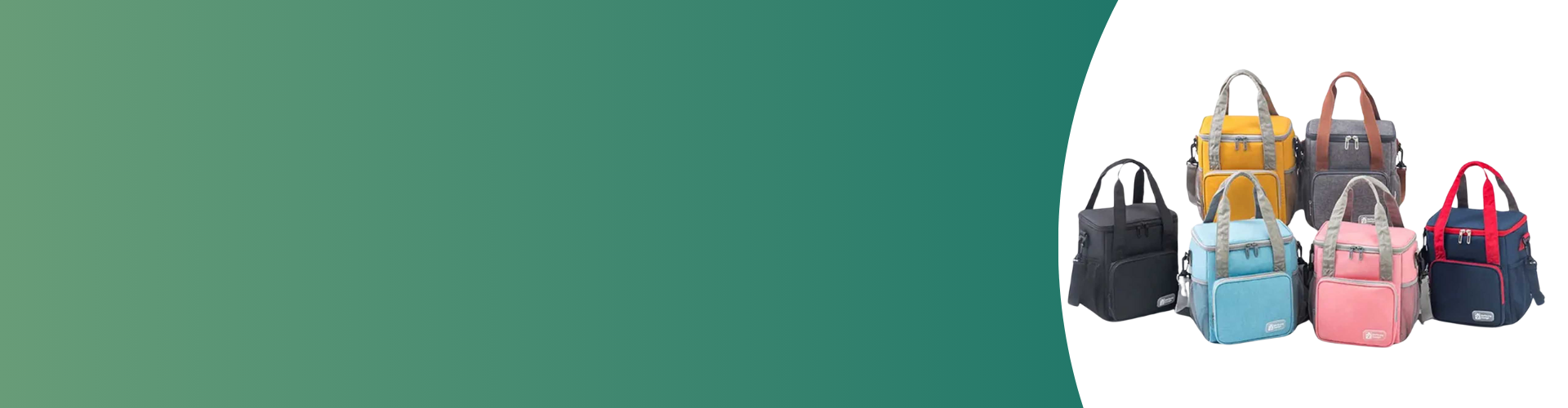
A Best Insulated Bag Must Be
- Durable water-resistant and stain-resistant outer materials
- Highly insulating foam interlayer
- Food-grade, PVC-free interior lining
- Leakproof and easy-to-clean design
- Comfortable padded handles and shoulder straps
- Strong and structured construction with excellent load-bearing capacity
- Brand-focused aesthetic design with customizable details

Wholease Custom Insulated Bag Factory Supplier
As a leading supplier of custom-made durable insulated bags, we are committed to creating customized products that meet your market needs through high-quality, innovative, and environmentally friendly materials and rigorous production processes.
Our insulated bags are made from 30%-70% recycled PET (GRS certified) and sugarcane-derived EVA (carbon negative emissions), offering a combination of environmental friendliness, durability, practicality, and efficient temperature maintenance.
To comply with food safety regulations, our custom-made insulated bags use PVC-free lining materials, such as PEVA or aluminum foil. Furthermore, we closely monitor the compliance of lining coatings, inks, and related components, supporting the use of low-VOC inks and utilizing sophisticated equipment to minimize material waste during production.
The minimum order quantity for custom lunch bag wholesale orders is typically 300 pieces, with the exact quantity depending on the material, size, structure, printing method, and accessory requirements. After confirming the design and materials, we will complete sample production for your confirmation within 7-10 days, while mass production is usually completed within 2 months, depending on the order quantity and design complexity.
Custom Insulated Bags for Commercial & Promotional Use
Kewei can develop and customize various styles of insulated bags for a wide range of applications, including everyday use, outdoor activities, retail projects, food service, supermarket projects, promotional activities, and wholesale distribution.
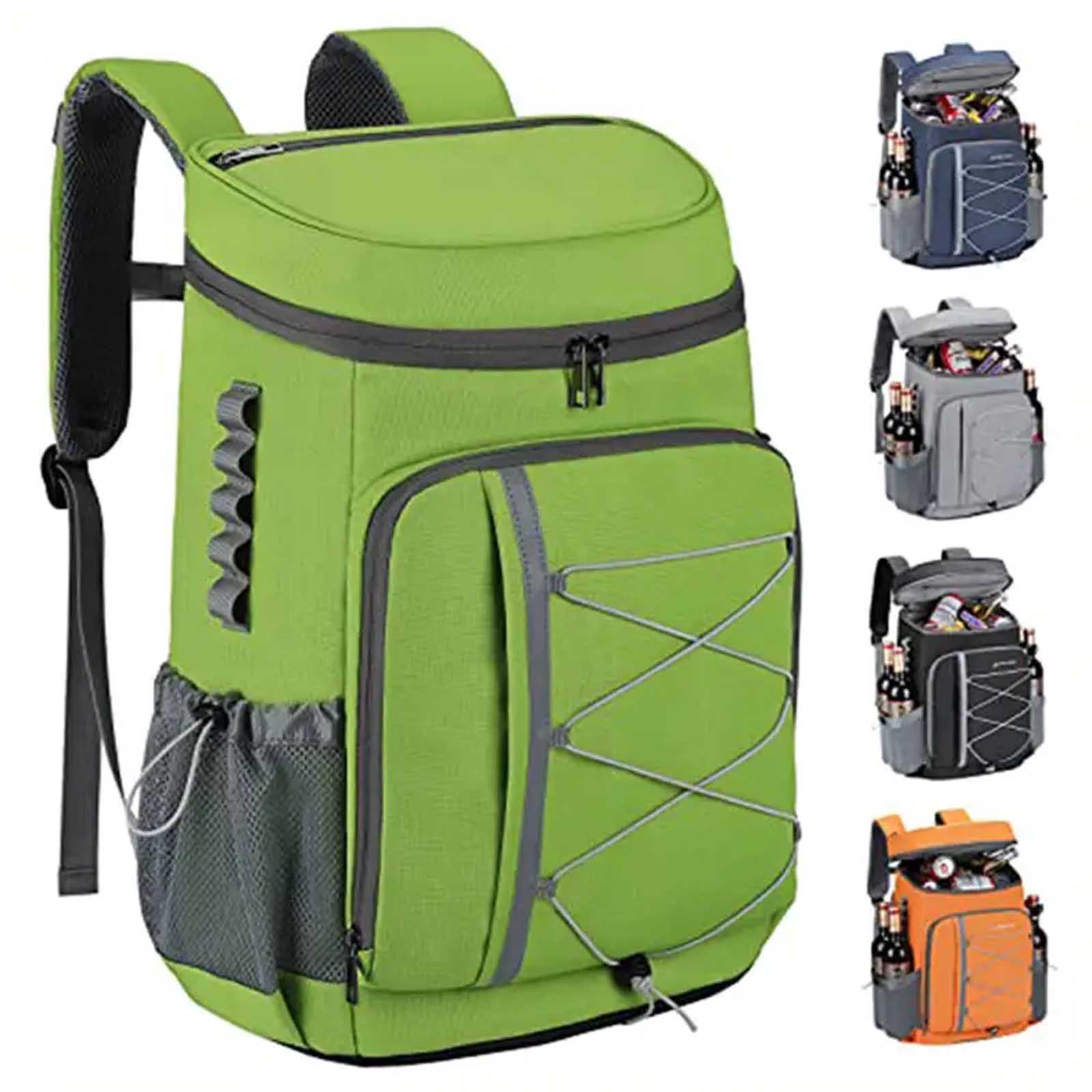
Leakproof Insulated Bag
The insulated backpack uses a PEVA lining and seamless ultrasonic welding, which can enhances its insulation performance and prevents leaks.

Double Layer Insulated Bag
This insulated bag is designed with two insulated compartments: the top compartment can hold hot food, while the bottom compartment can hold chilled drinks.

Shoulder Cooler Bag
This cooler bag features a padded top handle and an adjustable shoulder strap, making it easy to carry and transport, ideal for food delivery services.
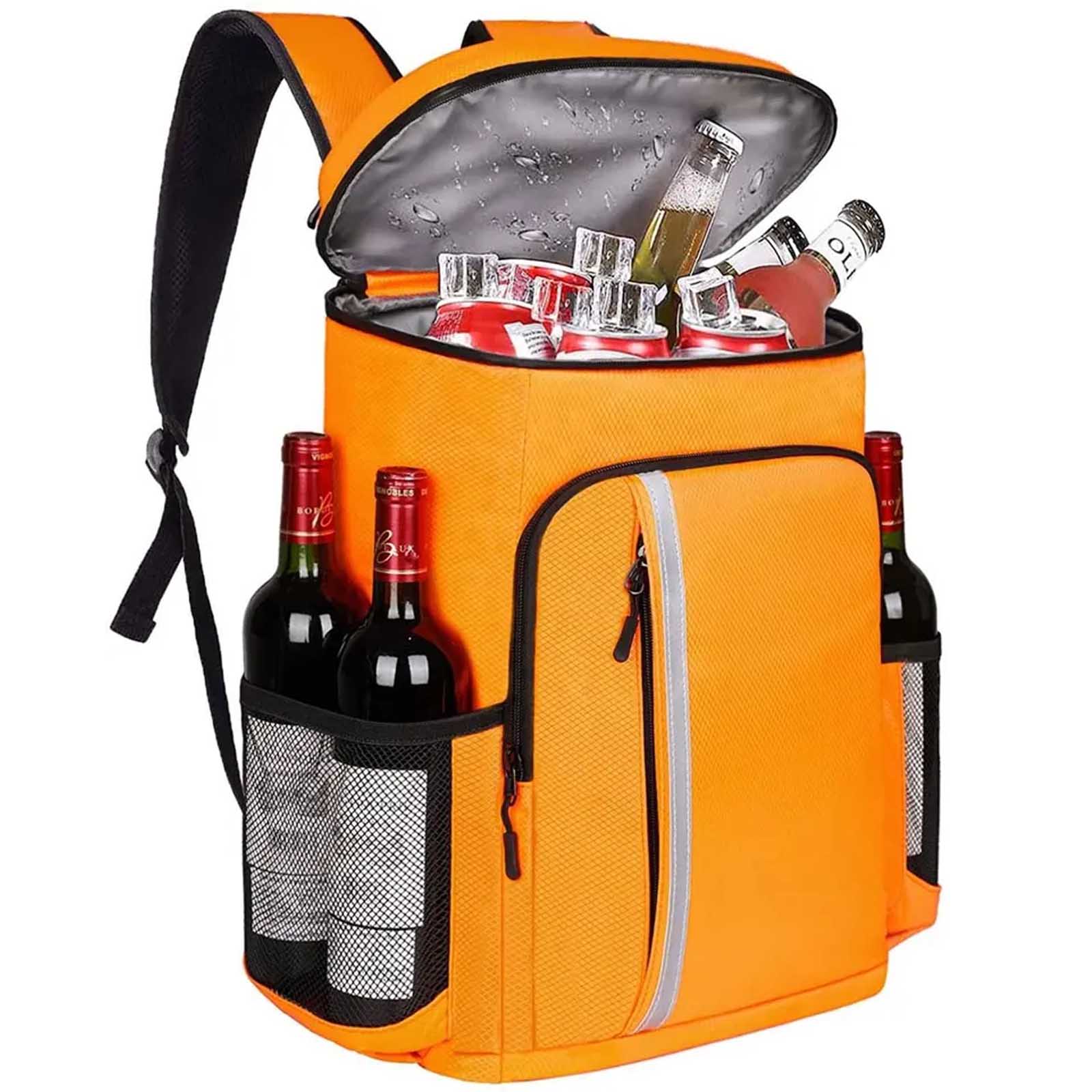
Outdoor Beer Insulated Bag
With a large 30L capacity,the insulated bag can hold more than 20 cans of beer. We’ve also design a bottle opener on the shoulder strap for easy outdoor use.
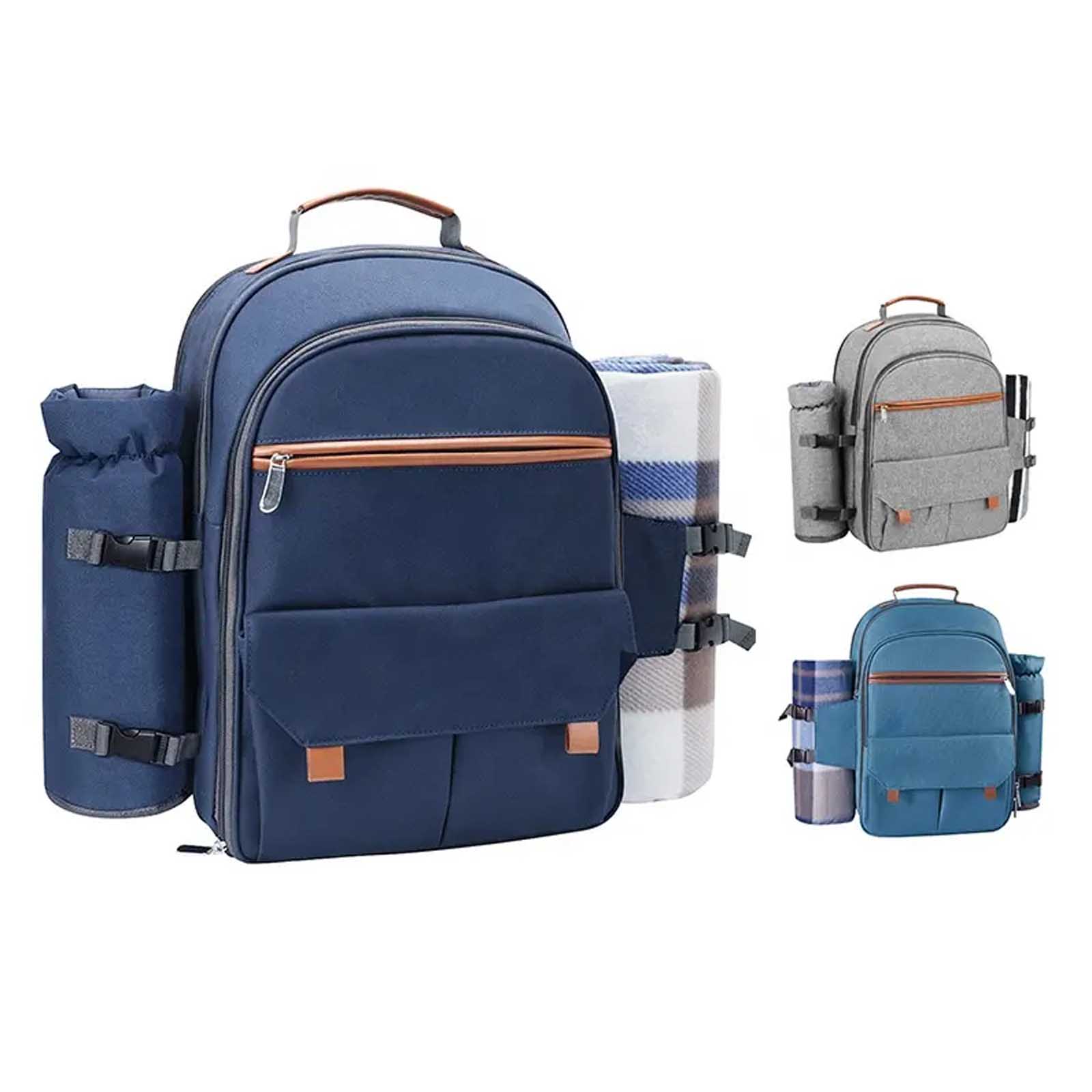
Polyester Picnic Insulated Backpack
The insulated bag is designed for picnics. It features multiple storage compartments and a removable waterproof pouch to store cups, cutlery, drinks, and more.

Oxford Thermal Insulated Bag
The thermal insulated bag usees a durable Oxford cloth outer layer that can withstand frequent use. Its 15-liter capacity provides ample space for a variety of foods.

Beach Insulated Handle Bag
The insulated handle bag exterior uses waterproof cotton canvas, providing durability and protection for outdoor use. The interior uses an EPVA lining, which is easy to clean and wipe down.

Soft Insulated Lunch Backpack
To enhance practicality, the insulated lunch backpack features a multi-pocket design, including a leak-proof insulated main compartment and 4 zipper pockets.
Choose the Best Material for Your Custom Insulated Bag
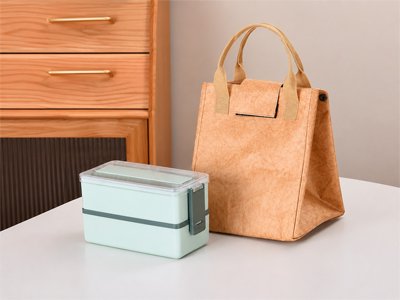 Tyvek
TyvekDuPont Tyvek insulated bags feature a unique paper-like texture, making them highly stylish. They are also waterproof, lightweight, and tear-resistant, ideal for everyday use, such as carrying lunch to school or work.
 Waxed Canvas
Waxed canvas insulated bags are sturdy and durable, able to withstand frequent daily use. Their slightly waterproof properties protect the contents from moisture. The waxed finish gives the bag a sophisticated vintage look.
 RPET
RPETRPET cooler bags, made from recyclable materials, align with the sustainable development principles of B2B companies. These bags have a slightly glossy, lightweight texture while maintaining durability and insulation.
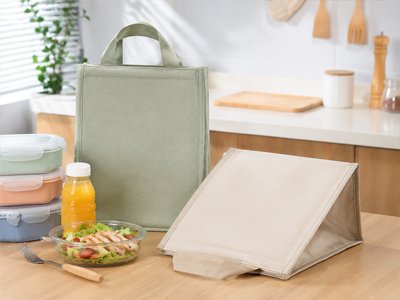 Non-woven Fabric
An affordable, customized lunch bag solution. Non-woven lunch bags are flexible, lightweight, and durable enough to safely store your lunchbox. The smooth surface is particularly suitable for printing clear logos and designs.
 Polyester
Tightly woven polyester insulated bags are waterproof and highly abrasion-resistant, resistant to damage even with prolonged and frequent use. Its surface is smooth and soft to the touch, making it suitable for a variety of use scenarios.
 Oxford Cloth
Oxford cloth has a very dense weave, making insulated bags made from it extremely sturdy and durable, with excellent abrasion resistance. It has a refined appearance, a crisp structure, and doesn’t easily deform when holding heavy items.
 Neoprene
Neoprene insulated bags are soft to the touch and have a more outdoor/sports-oriented look. The smooth surface allows for easy wiping away of everyday stains and water. It also provides cushioning and some insulation.
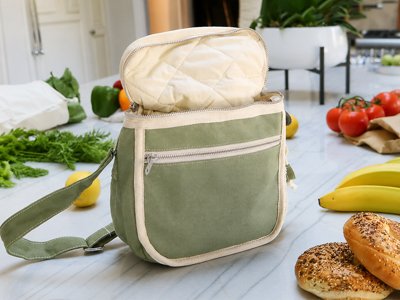 Organic Cotton
Organic cotton insulated lunch bags are soft to the touch and comfortable to carry. The breathable fabric reduces odors inside the bag. As a fully biodegradable material, it is favored by brands that value sustainability and natural aesthetics.
Insulation Layer of Custom Insulated Bags
The main function of the insulation layer is to trap air and reduce heat transfer from the external environment to the interior. The material and thickness of the insulation layer affect the short-term insulation effect and duration. Kewei offers a variety of insulation layer solutions, including:
Polyethylene Foam: The most commonly used material for insulation layers, offering excellent insulation performance and a highly competitive cost. It is lightweight, flexible, and easy to mass-produce.
EVA Foam: High density and durability, making it ideal for insulated bags requiring longer insulation time and greater compression resistance.
PU Foam: Compared to polyethylene and EVA foam, PU foam offers the best insulation performance. However, due to its stable structural characteristics, it is more suitable for rigid insulated boxes than flexible insulated bags.
In addition, we offer a variety of foam thicknesses, including 3mm, 5mm, 8mm, 10mm, 15mm, and 20mm, suitable for various sizes and types of insulated bags.

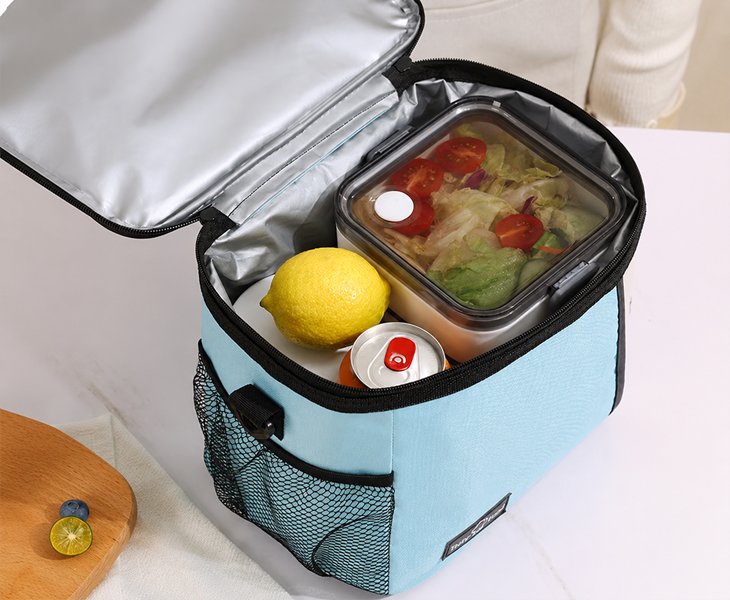
Wholesale Insulated Lunch Bag Custom Lining Options
The inner lining of insulated lunch bags is primarily responsible for leak prevention, hygiene, and insulation. We offer:
Aluminum Foil: Highly reflective of radiant heat and low cost, ideal for promotional lunch bags.
Heat-Sealed PEVA Lining: Food-grade leak-proof lining option. BPA-free and odorless, soft to the touch and easy to clean.
TPU Welded Lining: More durable and waterproof than PEVA, perfect for outdoor insulated bags. High elasticity and heat/cold resistance better hold hot food and cold drinks without deformation.
Hybrid Lining Systems: Combining multiple materials for better performance. Includes:
- PEVA + Aluminum Foil Laminate: Effectively enhances the waterproof and thermal insulation properties of insulated bags.
- TPU + Reflective Layer: Enhances durability without sacrificing insulation performance.
Advanced Printing Options for Custom Insulated Bags We Offered

Screen Printing
Screen printing is ideal for large-volume orders of promotional insulated bags made from nylon, polyester, or non-woven fabric. It produces logos and designs with vibrant colors and crisp details.


Heat Transfer
Compared to screen printing, heat transfer offers a lower unit cost. It captures intricate design details and supports gradients, multi-color graphics, and high-resolution imagery, making it an excellent choice for small-batch orders.
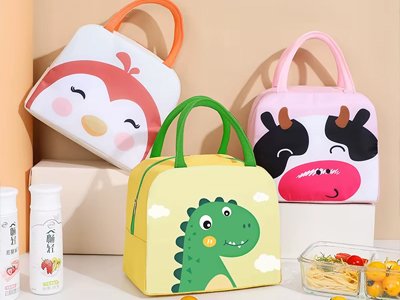

Digital Printing
Digital printing technology delivers high resolution and accuracy, ensuring sharp details on the bag’s surface. Combined with durable pigments and inks, the printed designs remain vibrant and clear even with long-term use.

Woven Labels
Woven labels offer a refined appearance and can incorporate intricate branding elements such as logos, text, and patterns. Sewing a woven label onto an insulated bag creates a professional, premium look.
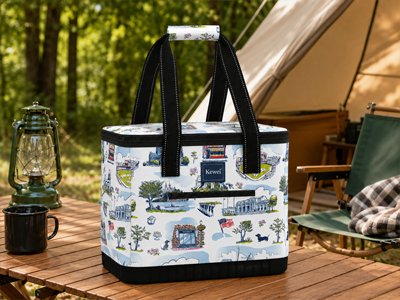

Rubber Patch
Rubber patch features vibrant colors and sharp details while resisting scratches, fading, and wear. They are ideal for insulated bags used in camping, food delivery, or event promotions, ensuring the brand identity remains intact even in demanding environments.


Embroidery
Embroidered logos are highly durable and create a 3D effect on the bag’s surface, elevating the product’s perceived quality. Additionally, embroidery is compatible with a wide range of materials and offers extensive customization options.

Why Global Retail & Brands Choose Kewei
As a global manufacturer, Kewei offers OEM/ODM, custom, and personalized insulated bag solutions—including bespoke detailing, wholesale programs, and reliable mass production—to meet the needs of brands seeking both high performance and scalability.
- Advanced thermal engineering
- Leak-proof, waterproof, and food-safe construction
- One-stop OEM/ODM services
- Over 20 years of manufacturing experience
- Modern facilities exceeding 70,000 m² with a workforce of over 300 skilled employees
- Flexible MOQ starting at 300 pcs
- In-house R&D team of over 20 professionals
- Rapid development turnaround of 7–14 days
- Dedicated sales team providing 24-hour response
Committed to long-term partnerships—we focus on building enduring relationships, not just processing orders.

Custom Insulated Bag Solutions for Different Industries
We can develop custom insulated bags with unique features specific to your industry. Simply share your requirements with us, whether for food delivery or outdoor exploration.

Outdoor & Sports
- For outdoor and sports applications, we design insulated bags with convenient carrying handles and shoulder straps, making them easy to take anywhere.
- Multiple easy-access insulated compartments help maintain the temperature of food and beverages during outdoor activities.
- Durable outer materials and reliable closures provide better protection in challenging environments.

School & Office
- Insulated lunch bags designed for schools and offices need to provide safety, organization, and lightweight portability.
- PVC-free lining materials offer a safer solution while supporting easy cleaning and long-term daily use.
- Structured compartments help separate lunch boxes, drinks, and utensils.
- Lightweight construction and comfortable handles make everyday carrying easier and more convenient.

Food Delivery & Retail
- For food delivery and retail applications, durability, hygiene, and food protection are essential.
- Durable outer fabrics such as Oxford polyester, combined with waterproof lining and reinforced structures, help protect food containers during handling and transportation.
- Easy-to-clean interiors simplify daily maintenance.
- The rectangular design allows efficient storage in car trunks and back seats, while also supporting stackable storage to save space.
What are insulated bags made of?
- Insulation Materials
Foam Insulation: Polyethylene (PE) foam or polyurethane (PU) foam is often used as the insulating layer to trap air and reduce heat transfer.
Reflective Layers: Aluminum foil or Mylar is added to reflect heat and improve thermal efficiency.
Thermal Liners: Non-toxic, food-safe materials like PEVA (Polyethylene Vinyl Acetate) are used for the inner lining to ensure safety and insulation.
- Outer Shell Materials
Polyester (PET): Durable and water-resistant, often used for the outer layer. Recycled PET (rPET) is a sustainable option.
Nylon: Lightweight and strong, commonly used for high-quality bags.
Canvas: A sturdy and eco-friendly option, often used for reusable shopping bags.
- Eco-Friendly Options
Recycled Materials: Many insulated bags use recycled PET (rPET) or other recycled fabrics to reduce environmental impact.
Plant-Based Materials: Sugarcane-derived EVA (Ethylene Vinyl Acetate) is a carbon-negative alternative used in some eco-conscious designs.
- Additional Features
Zippers and Seals: Made from durable plastic or metal to ensure a tight seal and prevent temperature loss.
Reinforced Handles: Often made from nylon, polyester, or cotton for added strength and comfort.
- Certifications and Safety
Insulated bags may be certified by standards like BSCI, ISO 9001:2015, or OEKO-TEX® to ensure they are chemical-safe and non-toxic for food storage.
Do insulated bags work?
Thermal bags maintain temperature by combining reflective barriers, insulating layers, and airtight sealing to minimize heat transfer through:
Radiation Blocking:Inner heat-reflective foil (≥97% reflectivity) deflects infrared radiation.
Conduction Resistance:Closed-cell EPS/XPE foam (thermal conductivity: 0.028–0.038 W/m·K) slows heat flow.
Convection Prevention:Sealed seams and thermal-break zippers eliminate air exchange.
What size should I choose for a custom insulated lunch box?
| Size | Dimensions | Usage |
|---|---|---|
| Small | 7–8 inches | Suitable for simple meals, children’s lunches, and snacks |
| Medium | 8.5–10 inches | Suitable for daily work and school use |
| Large | 10–13 inches | Ideal for camping, picnics, and carrying multiple meals |
What is the difference between an insulated lunch bag and a regular lunch bag?
Regular lunch bags are usually made with a single layer of materials such as canvas, cotton, or polyester. Although they may offer a more stylish appearance and provide basic storage and protection, they do not provide insulation.
Insulated lunch bags use a “sandwich” structure. The outer layer is made from durable fabrics such as polyester, nylon, or canvas. The middle layer consists of high-density insulation foam, which effectively reduces heat transfer and provides insulation performance. The inner layer is usually a silver reflective and waterproof lining, which helps reflect heat and maintain the internal temperature.
How to Clean an Insulated Lunch Bag?
To prevent unpleasant odors and the growth of bacteria, regular cleaning and proper maintenance of an insulated lunch bag are essential.
- Empty all items from the lunch bag, turn it upside down, and gently shake it to remove crumbs and any remaining debris.
- First, clean the insulated layer. Use a mixture of water and white vinegar to wipe the inner lining. This helps remove odors and kill bacteria without damaging the material.
- Then clean the exterior. Soak a sponge or cloth in soapy water, wring it out, and wipe the outside of the lunch bag. The bottom area may require extra cleaning.
- Rinse with clean water, then leave the lunch bag open and place it upside down in a well-ventilated area away from direct sunlight to air dry.
