Whether in a suitcase or travel bag, clothes are probably the most important and often the most frustrating item to pack, as they often take up a lot of space. Therefore, using the right packing method can significantly reduce the volume of clothing, helping you maximize the space in your suitcase and travle bag. Today, Kewei will share the two most common packing methods: folding and rolling, along with their respective advantages and disadvantages, to help you make the right choice.
Folding
Many people instinctively fold their clothes before traveling, perhaps due to my habit of organizing clothes at home. However, when traveling, we can choose a packing method based on the nature of the clothing. So, which clothing is best suited for folding?
Which Clothing Is Best Suited for Folding?
Clothing That Wrinkles Easily
Clothing that wrinkles easily, such as suits, shirts, and other cotton and linen items, is best folded.
Large Clothing
such as sweaters, thick coats, and small blankets, is better suited for folding, as rolling them up might take up more space.
Stiffer Clothing
Clothing with a more defined shape, such as jeans and denim jackets, is less prone to rolling and may therefore be better suited to folding.
Advantages of Folding
Folding is our most common packing method. Whether at home or at the store, you’ll likely see folded clothing the most. This is because folding offers the following advantages:
Simple and Efficient
Folding is a common packing method, and we can easily and quickly fold clothing simply by relying on muscle memory.
Keep Clothing Flat
Folding prevents wrinkles from forming, especially on shirts, suits, and other items that wrinkle easily.
Keep Luggage Tidy
Placing clothing folded and neatly in a suitcase or travel bag keeps the interior of the bag looking clean and tidy.
Disadvantages of Folding
While folding offers many advantages, it also has some drawbacks:
Underutilization of Space
Folded clothing can leave small gaps in a suitcase or travel bag, which can sometimes be difficult to fill with other items. This wastes storage space, leading to the folding method taking up more storage space than rolling clothing.
Difficulty Accessing
Folded clothing can be difficult to access in a suitcase or travel bag, especially when placed at the bottom. Therefore, folding may require planning your clothing order in advance.
How to Fold?
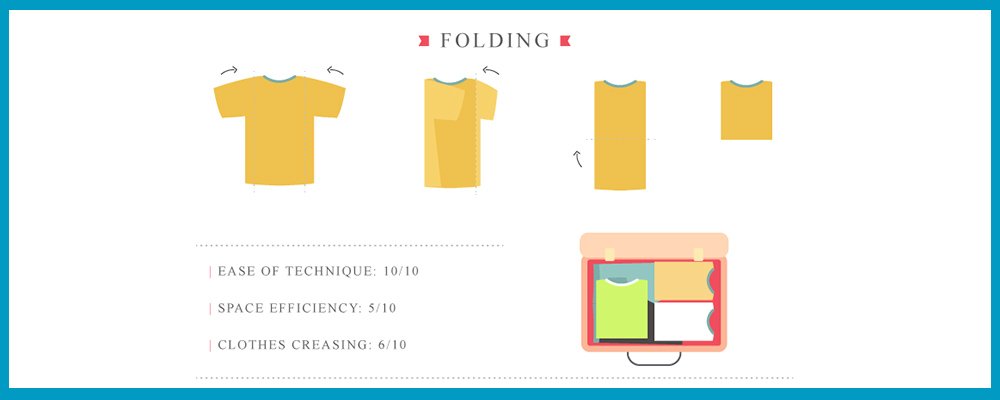
Lay your clothes flat on a bed or tabletop and arrange them to minimize wrinkles. Then, fold the sleeves inward and fold the clothing twice symmetrically horizontally and vertically to create a smooth rectangle. Finally, pack your clothes in your suitcase or travel bag in the order you planned.
Rolling
Compared to folding, rolling effectively compresses the volume of clothing, maximizing space in your suitcase or travel bag. However, it’s important to note that not all clothing is suitable for rolling. Bulkier items like sweaters aren’t suitable. So, which clothing is best suited for rolling?
Which Clothing Is Suitable for Rolling?
For example, soft, wrinkle-resistant, and bulky clothing made of lycra or polyester fabrics, such as T-shirts, pants, socks, underwear, and casual dresses, are better suited for rolling.
Advantages of Rolling
Space Saving
Rolling allows you to roll your clothes into long strips, making them more compact when packing, leaving more space for other items.
Easy Access
Rolled clothing is easier to find and access than folded, tightly packed clothing. It’s also less likely to get tangled, reducing the time it takes to reorganize.
More Organized
Rolled clothing is more compact and organized in your suitcase or travel bag. The long, rolled strips also add a more three-dimensional look to your travel bag.
Disadvantages of Rolling
Time-consuming
Rolling takes longer than the more familiar folding method. Therefore, before rolling, you should fold the garment symmetrically to form a rectangular shape that is easier to roll.
Not Suitable for All Clothing
Bulkier garments like sweaters and rigid, structured garments like jeans are not suitable for rolling. Besides being more difficult to roll, they may also take up more space when rolled.
How to Roll?
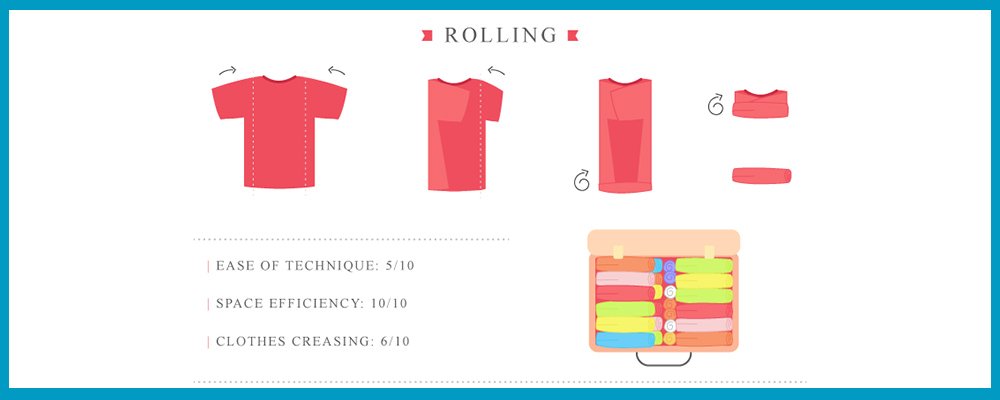
First, lay the garment out and smooth out any wrinkles. For tops, fold the sleeves toward the center of the garment, then fold upward from the bottom hem, smoothing out any wrinkles as you fold. If you want to roll a smaller garment, fold the sleeves inward and then align the garment along its centerline.
For pants, simply lay out and smooth out any wrinkles. Then, fold the pants in half to form a pile so you can roll them down from the top, smoothing out any wrinkles as you roll them down.
Folding Or Rolling: Which One Should You Choose?
Both packing methods have their pros and cons. You can choose one based on your needs, or combine them to maximize the limited space in your suitcase or travel bag. Once you’ve decided on a packing method that works for you, choose a suitable suitcase or travel bag to pack your belongings and start your journey.
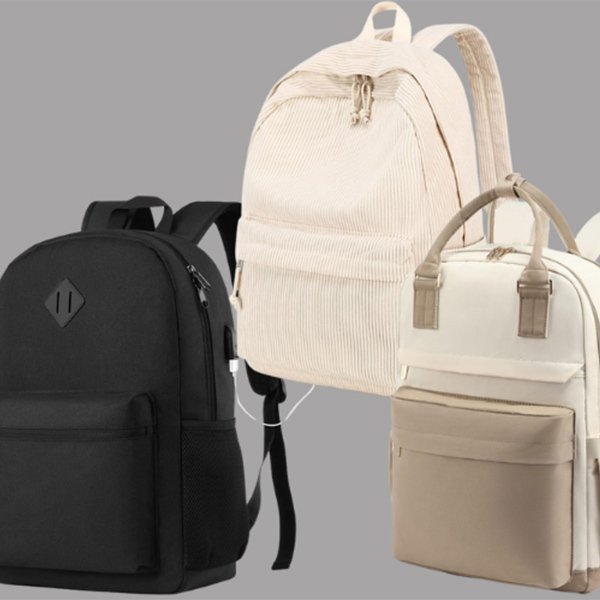
Kewei offers a variety of sizes and styles of suitcases and travel bags that are both stylish and durable. They also feature ample storage pockets, compartments, and support OEM and ODM customization, providing a unique travel experience.