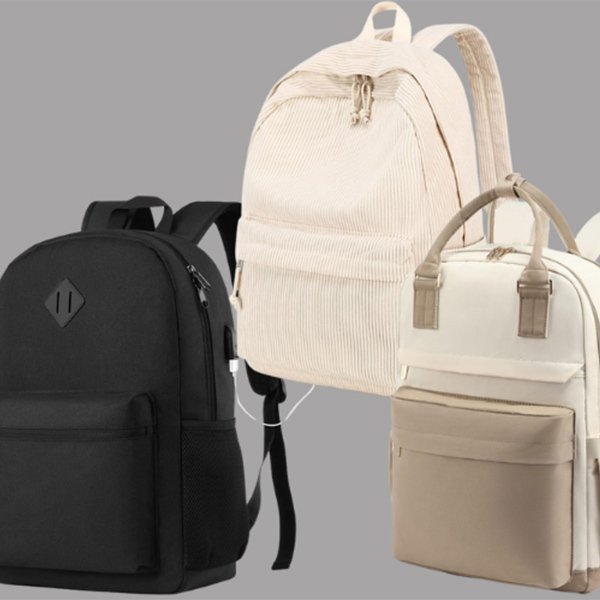
As a professional bag and backpack manufacturer, Kewei has established long-term, stable relationships with many B2B buyers thanks to its high-quality products, stable and efficient production, customizable solutions, and attentive after-sales service. We understand the key factors B2B buyers need to consider when purchasing custom backpacks. Today, Kewei will provide a detailed explanation of what B2B buyers need to consider when purchasing custom backpacks. If you’re a B2B buyer looking for the right custom backpack solution, we believe this article will be helpful.
Determine The Backpack Style
Different B2B customers have different business models. If you’re a brand selling backpacks directly to your customers, you need to determine the custom backpack styles you need based on your niche, customer base, and best-selling models. For example, if you’re an outdoor brand, you might need to customize backpacks for hiking, mountaineering, cycling, and other outdoor styles.
If you’re a backpack distributor, you might need to customize a variety of backpack styles. This way, you can be sure your customers have the backpack they need when they find you.
Whether you’re a brand, distributor, or retailer, when communicating with your manufacturer about custom backpack solutions, you need to clearly communicate the style of the backpack, ideally using accurate and professional terminology. This ensures the manufacturer can design in accordance with your expectations.
Clarify the Materials Used
The material you choose affects the weight, durability, and price of your backpack. You should determine the material based on the style and intended use. Consider the following aspects:

Fabric
Common backpack fabrics include nylon, polyester, canvas, and leather, each with varying performance characteristics and cost.
Nylon
Nylon is lightweight, waterproof and abrasion-resistant, and easy to clean. Backpacks made of nylon are lightweight, durable, and resistant to wear and tear. Therefore, it is a common material for outdoor backpacks, travel backpacks, and school backpacks. Nylon can be categorized as 420D, 840D, or 1680D, with the higher the density, the higher the price.
Polyester
Compared to nylon, polyester is relatively inexpensive. While its abrasion and tear resistance are somewhat inferior to nylon, it’s perfectly adequate for everyday backpacks, such as casual daypacks, lightweight travel bags, and school bags. Furthermore, compared to nylon, polyester offers better UV protection and resists fading even after prolonged exposure to sunlight.
Canvas
Canvas has a certain weight, a textured feel, and good wear resistance, making it a common material for travel bags, commuter bags, and school bags. However, canvas is not waterproof, stain-resistant, and requires regular cleaning, making it relatively expensive.
Leather
Leather can generally be categorized as either faux leather or genuine leather. Faux leather resembles genuine leather and is waterproof, lightweight, and easy to clean. It can be used for business and fashion backpacks. While slightly more expensive, it’s still relatively affordable compared to genuine leather.
Compared to faux leather, genuine leather has a softer, more lustrous feel, is more durable, and resists cracking and peeling even after long-term use. However, it’s more expensive, less waterproof, and requires regular maintenance. It’s typically used in high-end brand backpacks.
Accessories
Backpack accessories generally include fabric, buckles, webbing, and zippers.
Fabric
Fabrics include lining, mesh, and plaid. They’re often used as the interior material or for the left and right pockets and are inexpensive.
Buckles
Buckles come in a variety of shapes, typically tailored to the specific structure and location of the backpack. You can discuss this with the manufacturer. The style of your backpack also determines whether you need plastic or metal buckles.
Webbing
Webbing is a crucial component of a backpack, serving multiple functions, including load-bearing, adjustment, securing, and decorative purposes. Webbing mainly comes in polyester, imitation nylon, and cotton types, each with distinct characteristics. For example, polyester webbing offers high strength, abrasion resistance, and tear resistance, making it suitable for outdoor backpacks. Imitation nylon webbing offers a certain weight-bearing capacity and abrasion resistance, while also being cost-effective, making it suitable for commuter bags and gift bags. Cotton webbing is soft, comfortable, and has a good feel, making it commonly used in casual and fashion backpacks.
Zippers
Zippers significantly impact the backpack’s user experience. Imagine the feeling of a flimsy, easily stuck zipper. Therefore, it’s best to choose YKK or other high-quality zippers.
Determine Capacity And Structure
Backpacks vary in capacity and structure for different usage scenarios. As a B2B customer, you need to understand which capacity backpacks typically sell well so you can purchase more and ensure sufficient inventory. It’s also important to consider whether your customer base requires categorized storage, which can help you determine the number of compartments in your backpack.
Determine Customization Options
Customization options vary from manufacturer to manufacturer, such as whether the backpack’s color, fabric, logo, and packaging can be customized. Therefore, be sure to understand and inquire clearly before choosing one.
Determine Price, Minimum Order Quantity, and Delivery Time
Prices, minimum order quantities, and delivery times vary for different OEM customization options, so you should consult your manufacturer. Generally, the price and minimum order quantity are related to production costs, product type, and the complexity of the customization. Complex products typically have higher costs and complex manufacturing processes, so their minimum order quantities may be higher. Simpler products may have lower costs and simpler manufacturing processes, so their minimum order quantities may be lower. The specific price and minimum order quantity depend on your specific needs and should be negotiated with the manufacturer.
Regarding delivery time, larger orders will require longer production cycles, resulting in longer delivery times. You should still communicate and negotiate the specific details with your manufacturer to ensure they are within your acceptable range.
Why Choose Kewei?
Kewei, a professional bag and backpack manufacturer, has over a decade of experience providing one-stop packaging solutions for a wide range of industries. Our advantages include:

With a comprehensive product line, we can recommend the right product for you, whether it’s gym bags, sports bags, travel bags, or outdoor bags.
Our comprehensive supply chain ensures a smooth and organized production process at Kewei, allowing for maximum control.
Our raw material suppliers are carefully selected to ensure high quality, and we undergo rigorous factory inspections, including abrasion resistance testing and belt stretch testing, to ensure our bags are consistently high-quality and durable.
With advanced OEM capabilities, we can customize your bags with your logo, embroidery, or prints to enhance your brand image.
With over ten production lines, advanced equipment, and a dedicated team, we ensure your orders are completed and delivered on time, ensuring your sales plans are on track.
Our dedicated after-sales service team is available to promptly respond to any questions and provide solutions. Choose us for a worry-free after-sales experience.
By reading this article, B2B buyers in the backpack industry can choose a suitable backpack manufacturer to meet their customization needs and effectively improve their business. If you are currently looking for a suitable custom backpack manufacturer, you may wish to contact Kewei. We will provide you with professional OEM/ODM support, design consulting, sample services, etc. Let us provide the necessary support for your business growth.