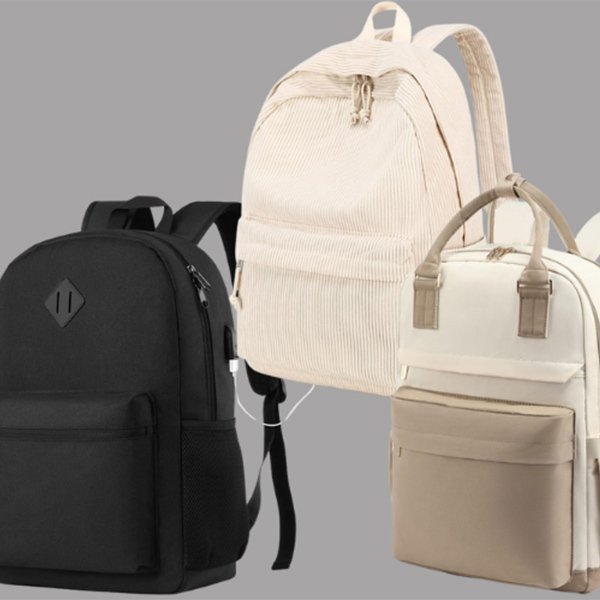
Bag manufacturers offer a variety of styles, some called “backpacks” and others “rucksacks,” but you might find that these bags look similar. So, what’s the difference between a backpack and a rucksack? This article may offer the answer.

Backpacks are more versatile, suitable for outdoor hiking, commuting, and short trips. Rucksacks are more durable and sturdy, and were primarily used in the military in their early days.
Over time, modern backpacks and rucksacks have incorporated more user-friendly and advanced designs, such as internal frames, ergonomic designs, padded hipbelts, and ample compartments. Today, the main difference between backpacks and rucksacks is more a matter of regional terminology.
Different Definition
The term “backpack” was coined by Americans, who often referred to children’s school bags as “backpacks.” However, more broadly, a backpack refers to any bag with two shoulder straps, including school bags, commuter bags, travel bags, and everyday bags.
The word “rucksack” comes from the German “der rücken,” meaning “back.” It refers to a large, sturdy backpack and is now commonly used to refer to backpacks suitable for hiking and camping.
Different History
The development of backpacks has undergone several significant periods:
-An early backpack-like object was discovered with the Tzi mummy in 1991;
-In 1938, Gerry Cunningham designed the first large backpack with two zippered compartments;
-In the mid-20th century, Dick and Nina Kelty designed a backpack with a parachute, which made backpacks suitable for mountaineering and hiking;
-In 1970, the Keltys innovated external reinforcement methods, such as clip-on belt buckles.
The development of the rucksack has evolved through several periods:-Before the 18th century, shepherds, hunters, and woodcutters in the Alps used bags for short distances to carry tools, game, or daily necessities, typically featuring a three-piece construction.
-In 1908, Ole F. Bergan, inspired by the soft leather quivers of archers, invented the world’s first soft-frame backpack. Due to its practicality and performance, the rucksack was adopted by armies of many countries, and gradually became a military backpack.
-In the second half of the 20th century, with the end of war, outdoor activities became increasingly popular. The rucksack, due to its performance, became the preferred choice of early outdoor enthusiasts. Following refinements by brands like Dick Kelty, Lowe Alpine, and Gregory, it became more suitable for use as a hiking, ski, and mountaineering backpack.
Different Features
The term “backpack” is more intuitive and primarily emphasizes its practical purpose: a bag worn on the back.
A good backpack should not only have two shoulder straps to support some of the weight, but also a padded waist belt. This helps transfer the weight of the backpack to the hips, reducing the strain on the shoulders.
Rucksacks are typically made of durable waxed canvas or high-tech materials. To organize and organize items, they feature multiple pockets and attachment points, including front and side pockets, internal compartments, and adjustable external webbing for attaching water bottles, tool bags, and various accessory bags. To enhance support and carrying comfort, rucksacks also feature an internal frame structure, an ergonomic design, and adjustable shoulder, hip, and chest straps. Rucksacks typically have a main access point at the top, which is typically used for fastening or cinch.
Different Uses
Backpacks come in a wide variety of styles, offering great flexibility. If you’re looking for everyday carry, including books, a computer, and digital gadgets, you can choose a commuter backpack. Students can opt for a student backpack, hunters can choose a hunting backpack, and anglers can choose a fishing backpack. For outdoor camping or hiking, a professionally designed outdoor backpack is an ideal choice. These backpacks differ primarily in design and material.
Rucksacks are commonly used for outdoor activities such as hiking, mountaineering, camping, and traveling. Many backpack manufacturers offer a variety of styles and capacities, making them suitable for both serious outdoor pursuits and shorter day trips.
| Features | Backpack | Rucksack |
| Style | More modern, minimalist, casual | Leaning towards outdoor or retro styles |
| Design & Structure | With multiple internal pockets; Mostly zippered compartments | With multiple external pockets; mostly flap closures |
| Fabric | Mostly lightweight fabrics | Mostly durable materials |
| Size | Available in various sizes, mostly small and easy to carry, suitable for everyday use | Larger sizes, suitable for travel, moving, and transporting heavy items |
| Durability | Can withstand frequent daily use | can withstand harsh and complex outdoor environments |
| Comfort | Ergonomically designed for greater carrying comfort | thicker shoulder straps, but less padding, still causing fatigue during prolonged use |
| Uses | Commuting, shopping, gym, short trips, school | Camping, hiking, travel, moving |
What are the Advantages and Disadvantages of Backpacks and Rucksacks?
Understanding the advantages and disadvantages of backpacks and rucksacks will help you rationally choose the style that best suits your brand and business needs.
Backpacks, as everyday carrying options, are lightweight, portable, and comfortable to carry, making them suitable for various everyday scenarios and thus appealing to a wider user base. For retailers or distributors, they can better help attract a broader consumer base. However, backpacks also have some drawbacks, such as a lack of durability, especially in challenging outdoor environments.
Rucksacks, compared with backpacks, are designed for complex environments, with sturdiness and durability being their main advantages. They also offer a large capacity and strong expandability, allowing for the attachment of multiple tool bags. However, when overloaded, they become bulky, and the lack of padding in the shoulder straps can cause shoulder pressure or strain during prolonged use.
Choosing Backpack or Rucksack?
As a bag manufacturer serving over 1000 brand clients, we believe that choosing between a backpack and a rucksack shouldn’t be too agonizing. Simply evaluate the following points to help you make a quick decision.
Appearance & Style
The appearance of a bag also influences its sales. Some consumers prefer bags with a simple design that combines style and functionality, making backpacks a better fit. Rucksacks are suitable for those who appreciate a vintage, understated, and rustic style.
Usage
If you’re an outdoor brand or your customer base consists mostly of outdoor enthusiasts, rucksacks are a better fit for your product line. If your customers prefer everyday use, light commuting, or city travel, backpacks are more suitable because they are lighter and more comfortable to carry, meeting the needs of these individuals.
Comfort
Carrying comfort also influences your customers’ decisions. Backpacks typically feature ergonomic designs, including padded, adjustable shoulder straps and a breathable back panel, ensuring comfort throughout the day. In contrast, rucksacks are relatively less comfortable to carry because they lack adequately padded shoulder straps, which may cause shoulder strain.
Storage Needs
The primary function of a bag is to meet the user’s storage needs. If your customers want a bag with ample storage and high security, we recommend a backpack. Backpacks offer more internal compartments, ensuring neatness and organization while providing greater security. Rucksacks offer even more storage space, featuring more external pockets and hanging points compared to backpacks, making them more expandable.
Summary
Although we often see the terms “backpack” and “rucksack” used interchangeably, “backpack” refers to a broader range of backpacks, and “rucksack” is a type of backpack. Furthermore, “backpack” is a commonly used term in the United States, while “rucksack” is more commonly used in the United Kingdom.
Why Cooperate with Kewei?
Whether ordering a backpack or rucksack, choosing the right bag manufacturer is crucial. As a professional Chinese bag manufacturer, Kewie boasts extensive experience in production and project collaboration. To date, Kewei has provided bag solutions for over 1,000 brands, including Nike. With a deep understanding of materials and craftsmanship, we can provide you with reliable, durable, high-quality, and cost-effective bag solutions tailored to your design needs.
FAQ
F: What characteristics should a good rucksack have?
A: A high-performance rucksack should have the following characteristics:
- Durable materials, such as 1000 denier Cordura fabric, ensure the rucksack can withstand harsh outdoor environments. High-quality YKK zippers and corrosion-resistant, abrasion-resistant buckles are also essential for a premium rucksack.
- Thickened shoulder straps. Thickened shoulder straps effectively distribute weight, preventing shoulder strain even during extended carrying and ensuring comfort.
- Reinforced stitching. The seams of the rucksack, such as the shoulder straps and other high-stress points, should be reinforced with double stitching to ensure durability.
F: What size rucksack is suitable for travel?
A: A rucksack with a capacity greater than 20L is generally sufficient for your simple travel needs.
- A 20L to 30L rucksack is suitable for day trips, such as forest hikes, beach trips, city sightseeing, and company outings.
- A rucksack size is 40L to 50L that is suitable for 2-3 day weekend trips, such as city weekend getaways or outdoor weekend trips.
- A rucksack larger than 50L is suitable for multi-day trips, including business trips, international travel, and outdoor camping.
F: Can you customize backpacks or rucksacks?
A: Yes. Kewei can provide customized backpack or rucksack solutions according to your needs. At Kewei, you can experience a variety of bag customization services, including fabric selection, carrying method, structure, size, logo and graphic printing, and packaging. Just tell us your ideas and needs.
F: Custom backpack vs. rucksack: What materials are commonly used in them?
A: Custom backpacks often use lightweight fabrics such as polyester, nylon, or cotton.
- Polyester has many advantages, including low cost, high colorfastness, and durability suitable for everyday use, making it an ideal choice for everyday backpacks.
- Nylon is more durable and lighter than polyester, and it doesn’t easily harden over time, making it another excellent choice for backpacks.
- Canvas is soft, skin-friendly, lightweight, and environmentally friendly; some eco-friendly bag brands often choose it for custom backpacks.
Custom rucksacks tend to use more durable materials, such as 840D/1000D nylon, Cordura, or waterproof TPU composites.
- High-density nylon excels in abrasion resistance and load-bearing capacity, making it ideal for custom rucksacks used in mountaineering, hiking, and travel.
- Cordura is a commonly used fabric in tactical backpacks and professional mountaineering packs, offering tear resistance, extremely high abrasion resistance, and water resistance. It’s a suitable choice for high-end custom rucksacks.
- Waterproof, oil-resistant, and sweat-resistant waterproof TPU composite fabrics offer advantages, making them an ideal choice for custom rucksacks used in water sports.