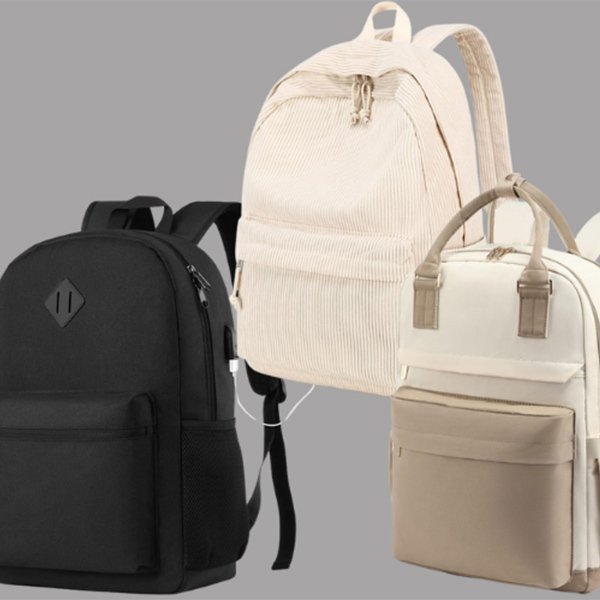
The best backpack for school should have enough space to hold essential student items such as books, lunch, sportswear, water bottles, and more, while still ensuring carrying comfort and meeting students’ daily learning needs.
As a professional bag manufacturer, Kewei develops more than 370 student backpack styles every year. This clearly shows that there are many types of school backpacks available on the market. From primary school to high school, the design focus of backpacks developed for each age group is different.
But in the end, a good backpack for school should include 5 important features, including size, comfort, laptop compartment, quick access, and durability.
Whether you are a parent, student, brand owner, or buyer, these factors can help you compare and choose a practical school backpack for daily use.
Choose the Right Backpack Size for School
Based on the daily school load of different grade levels, manufacturers design different school backpack sizes, allowing users to choose a more suitable one.
Simple Small Backpacks for lower-grade Student
Small school backpacks are suitable for students who only need to carry essential items, such as lower-grade students. These styles are usually under 20L and can typically hold textbooks, snacks, a pencil case, and a water bottle.
However, if students need to carry larger books, electronic devices, or more after-school items, the internal space may not be enough.
Everyday Medium-Sized School Backpacks
Medium-sized school backpacks for daily use usually have a capacity of around 20–25L, making them very practical. They provide enough space for textbooks, lunch, stationery, a light jacket, and a water bottle, while still avoiding a bulky appearance or adding unnecessary burden to children.
Compared with simple small school backpacks, these types usually have more pockets and compartments, including an easy-access front pocket, a spacious main compartment, and smaller secure storage pockets.
Large-Capacity School Backpacks
Large-capacity school backpacks of 30L or above are more suitable for high school students or college students with heavier academic loads. They can hold more textbooks, laptops, chargers, and sportswear.
To support heavier loads, large-capacity backpacks usually include a supportive back panel, reinforced bottom panel, and double-stitching reinforcement at stress points such as shoulder straps and handles. In addition, large school backpacks with padded shoulder straps or back panels can further improve carrying comfort.
Dedicated Laptop Protection Compartment in a Backpack for School
Many student backpacks claim to have a laptop compartment, but in reality, some only include a thin divider. Once heavy books press against it, a lunch box leaks, or the bag is accidentally dropped, the laptop may still be damaged.
A true laptop compartment should provide better protection, including:
- A raised padded laptop compartment that improves cushioning and reduces damage caused by bumps, impact, and pressure.
- An elastic fixing strap to prevent the laptop from sliding inside the backpack.
- A separate charger pocket or small accessory pocket.
Only with these details can a laptop compartment become more than just a marketing label. It becomes a real structural design that improves backpack performance.
Multi-Compartment Design for School Backpack
A backpack for school with multiple compartments provides more flexible storage functions. For school backpacks used for sports activities, features such as a breathable shoe compartment, wet/dry separation pocket, and removable washable lining are very useful. These designs help separate clean school supplies from sweaty sports shoes, sportswear, towels, and other items.
This not only helps reduce odor and bacteria growth, but also prevents the backpack from becoming overly bulky when everything is placed into one compartment.
Comfort Improves the School Backpack Experience
Whether it is a small school backpack or a large school backpack, comfort is essential. The following designs can greatly improve carrying comfort:
- School backpacks with padded shoulder straps, padded back panels, and chest straps feel softer, reduce friction discomfort caused by movement, and are more comfortable to wear close to the body.
- Adjustable designs allow users with different body shapes to adjust freely and avoid tightness or restriction.
- Mesh materials on the back panel padding help improve airflow and reduce heat buildup.
- Dual shoulder straps distribute weight more evenly, making the backpack easier and more comfortable to carry than a single-shoulder or handheld school bag.
How Long Can The School Backpack Last?
No one wants to buy a disposable product, so durability is one of the key standards for the best backpack for school.
From a manufacturer’s perspective, durability is not decided by fabric alone. Stress-point reinforcement, zipper quality, lining structure, and stitching control all affect the final product performance.
Fabric Is the Foundation of School Backpack Durability
Backpacks made from durable materials last longer and provide better protection for the items inside. Common school backpack fabrics include nylon, polyester, canvas, denim, and blended fabrics. Among them, nylon and polyester are ideal choices for entry-level student backpacks or promotional student backpacks due to their strength, weather resistance, and cost-effectiveness.
In addition to the fabric type, fabric weight, backing, and coating also affect backpack durability. Very thin fabrics that stretch or deform easily are not suitable for school backpacks.
Strong Construction
A good school backpack must have reinforced stress points to ensure it is not easily damaged during repeated pulling, friction, and compression in daily school life.
When choosing a backpack, check whether the shoulder strap connections, handle attachments, bottom corners, zipper ends, and bottle pockets are reinforced with strong stitching, firm binding, and clean seam finishing. Brand owners and retailers can directly ask the manufacturer how stress points are reinforced before approving samples.
High-Quality Hardware and Components
Besides fabric and structure, a good student backpack should be equipped with high-quality zippers, pullers, buckles, and cords. This helps avoid problems such as stuck zippers, bent zipper sliders, or detached components, which can disappoint customers.
For B2B buyers, it is not recommended to choose poor-quality accessories simply to save cost. Although end customers may not understand technical specifications, they can easily notice when a zipper is not smooth or a pull cord breaks easily. These issues reduce trust in the brand and may lower repeat purchase rates.
Lining Also Affects Durability
Poor-quality, loose lining and weak compartment stitching not only reduce the overall feel of theschool backpack, but also wear out more easily and reduce the backpack’s overall durability.
It is better to choose school backpacks with reinforced lining stitching, ensuring the bag remains stable even when fully packed and does not shift easily. In addition, a clean and well-finished interior usually indicates better overall production control by the manufacturer, helping ensure product quality.
Style and Aesthetics
Although functionality is essential, stylish backpack designs are more attractive, especially for students with strong personal preferences. Therefore, the best backpack for school should balance practicality and appearance, including:
Attractive colors and patterns: Classic colors or trendy colors, color blocking, tie-dye, co-branded patterns, and other designs can appeal to different student personalities.
Fabric combinations: Backpacks made with one consistent fabric look more classic, while backpacks using mixed materials have more visual layers and design appeal, such as canvas with a leather bottom.
Detail design: Antique brass buckles and zipper pullers, contrast stitching, removable badges, or hanging accessories can enhance the refined look and aesthetic value of the backpack.
How Parents and Students Can Choose the Right Backpack for School
Considering the following points can help you quickly choose a suitable backpack style for school:
Size: Choose the right school backpack size according to the number of items the student usually carries. Small school backpack cannot meet storage needs, while one that is too large may lead students to carry too many items and increase their burden.
Style and fit: First choose a style you like, then consider fit and comfort. A comfortable school backpack should have adjustable padded shoulder straps, a stable back panel, and a size that suits the student’s body. If necessary, you can measure back length to choose the right size. For detailed measuring steps, please read our related article.
Usage habits: Do not ignore quick-access pockets. They make it easier to take out keys, ID cards, earphones, and water bottles.
Compartment pockets: Compartments make storage more organized. However, if students need to carry electronic devices, a backpack with a dedicated padded laptop compartment is more suitable.
What Retailers and Brands Should Consider When Buying School Backpacks in Bulk
Choose Styles Based on the Target Group
No single backpack style can meet everyone’s needs. Primary school students, middle school students, and college students need different backpack appearances and capacities. Planning your custom backpack project based on the characteristics of each target group can better match market demand.
Primary School Backpacks
In terms of appearance, children’s or primary school backpacks often feature bright colors and cartoon characters to increase appeal.
Primary school backpacks need to be lightweight, comfortable to carry, and easy to manage. The shoulder straps are usually padded and adjustable, ensuring they fit smaller shoulders without causing discomfort. Side bottle pockets and easy-access compartments help children take out items conveniently.
In addition, easy-to-open zippers and durable, safe materials are essential to ensure the backpacks can withstand children’s active daily use.
Teen School Backpacks
Middle school students usually prefer backpacks with simpler designs and more storage compartments, making it easier to carry textbooks, electronic devices, and sports gear.
In addition, middle school students often carry heavier items, so durability and carrying comfort are very important. Reinforcement at stress points such as shoulder straps, the base, and handles can help prevent breakage during use. Padded back panels and shoulder straps help distribute weight evenly and reduce shoulder and back pressure during the school day.
College Backpacks
College backpacks should provide tech-friendly features, such as a padded laptop compartment and USB port. Storage pockets for chargers, pens, and other accessories should also be considered during design to help avoid disorganized storage.
Based on our experience with over 780 custom student backpack projects, we provide the following reference for your consideration:
| Comparison | Primary Students (6–12 Years Old) | Middle/High School Students (13–17 Years Old) | College Students (18+) |
| Design Focus | Safety, lightweight design, spine support | Durability, large capacity, functional design | Aesthetics, multi-scenario use, tech-friendly design |
| Recommended Capacity | 15–22L | 25–35L | 20–30L |
| Recommended Weight | ≤0.8kg | ≤1.2kg | ≤1.0kg |
| Carrying Focus | Breathable suspended back panel + S-shaped shoulder straps | Breathable suspended back panel + thick shoulder straps | Adjustable chest strap + luggage strap |
| Fabric Requirements | Lightweight, eco-friendly, non-toxic | High-denier nylon, tear-resistant | Matte texture, recycled fabrics |
| Storage Features | Large opening + timetable pocket | Multiple front functional pockets | Independent suspended laptop compartment + quick-access top pocket |
| Aesthetic Style | Cartoon/IP collaboration/bright colors | Solid functional style/contrast webbing | Minimalist/Nordic/Morandi colors |
| Safety Features | 360° reflective strips required | Reflective strips optional | No special requirement |
For brand owners or retailers, the product line should be as diverse as possible, including compact styles, everyday styles, and large heavy-duty school backpacks suitable for outdoor use.
Choose the Right Time for Customization and Launch
The National Retail Federation Back-to-School Data Center tracks purchasing behavior for different product categories among elementary, middle school, high school, and college students every year. The data shows that purchasing activity increases significantly during the back-to-school season, making it a peak sales period for retailers.
To receive and prepare goods before the sales peak, custom school backpack projects should ideally start 3–4 months in advance. This helps avoid delayed delivery or shipping issues that may prevent products from being launched during the peak season.
Choose Materials Based on Budget
For B2B buyers with a lower budget, choosing entry-level materials for custom backpacks is a more reasonable decision, such as simple nylon, polyester fabrics, ABS plastic zippers, and printing processes. These choices can maintain basic daily performance while effectively controlling the customization budget.
For mid- to high-end student backpacks, priority should be given to premium materials, such as leather, canvas, high-denier nylon, better lining, and strong YKK zippers. These materials can greatly improve the texture and quality feel of the backpack, allowing consumers to notice the difference.
Add Practical Features
Consider adding padded shoulder straps, convenient quick-access pockets, bottle pockets, dedicated laptop protection compartments, and weather-resistant coatings to school backpacks.
These features not only meet consumer needs, but also become strong selling points during customer presentations or product displays.
Request a Sample for Inspection
Before bulk production, request a sample from your backpack manufacturer. Check whether the weight, fabric, shoulder straps, bottle pockets, lining, and stitching quality meet your expectations. Before bulk production, bag manufacturers usually allow reasonable modifications and adjustments.
As an OEM/ODM bag manufacturer, Kewei can provide multiple service supports for brands, retailers, schools, and other educational organizations, including design support, material recommendations, brand customization, sample development, and bulk production. Contact us to get your exclusive custom student backpack solution.