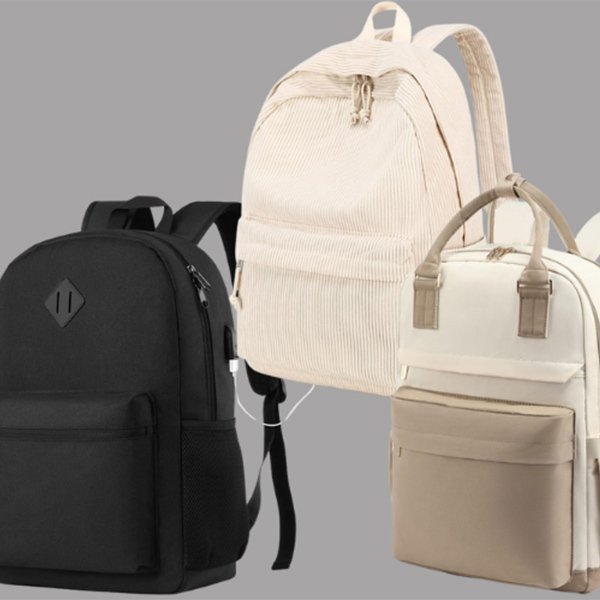
A crucial step in customizing a backpack is determining its size and capacity, as it determines whether the backpack can meet the needs of a specific activity and user. Just as a small backpack can’t hold your belongings, a extral-large backpack is heavier than needed, increasing the burden.
Backpack capacity is usually measured in liters, referring to its total internal volume—the total space it can hold. It includes measuring the volume of compartments and pockets, not just the external dimensions.
This blog will focus on four methods for measuring backpack liters and provide some tips for choosing the right backpack.
Method 1: Ruler Measurement
Measuring backpack volume using a ruler is a common method, involving the following steps:
- Measure the backpack’s length, width, and height.
- Multiply the length, width, and height to calculate the backpack’s volume.
Using our backpack volume calculator makes it even simpler:
Backpack Volume Calculator
However, note that this method has limitations, including:
- Measuring the internal length, width, and height is more time-consuming.
- The dimensions of some enclosed compartments cannot be measured.
- It only applies to rectangular bags like regular shopping bags.
Method 2: Following the American Society for Testing and Materials (ASTM) F2153-07 Standard
Most reputable backpack brands follow the measurement standard. Backpacks used for commuting, travel, and outdoor hiking are often irregularly shaped, such as narrower at the top and wider at the bottom. Using the formula “volume = length x width x height” will not yield accurate liters calculations, while measuring the backpack liters using this standard is more accurate. It requires:
- Prepare several 20mm diameter plastic balls.
- Place these plastic balls into all fully sealed pockets and compartments of the backpack until full.
- Pour the plastic balls into a measuring cylinder and measure the volume.
Note that this method does not include the volume of pockets/compartments that are not fully closed, such as external water bottle pockets, external compression bags, and shoulder strap/waist belt pockets.
Method 3: Measuring Backpack Volume with a Measuring Cylinder
The method is similar to Method 2, but it’s easier to find measuring tools. You don’t need to specifically buy 20mm diameter balls; just find rice or beans that you commonly use in your daily life. In China, many backpack and outdoor gear makers use the method to measure backpack volume, as it’s simpler and easier to use than other methods. You only need:
- Prepare rice or beans. If unavailable, you can use ping-pong balls or dried beans instead.
- Fill a measuring cup with rice and pour it into the backpack. You can measure it by filling only the main compartment or by pouring it into the outer pockets as well; there is no universal standard. In most cases, the storage capacity listed by bag manufacturers usually includes external pockets such as shoulder straps and waist belt pockets.
- Finally, count how many cups of rice/beans you filled the backpackto find the exact size of backpack. If each measuring cup is 1L and you filled 20 cups, then the liters og the backpack is 20L.

Method 4: Estimating by Comparing to Standard Backpack Sizes
Besides measurement and calculation, you can also compare your backpack to standard sizes to estimate its approximate capacity. We previously published a standard backpack size guide, which introduced size specifications and standard sizes for different types of backpacks.
How to Choose the Right Backpack Liters?
Backpack usage scenarios can be broadly divided into three categories: urban life, outdoor & travel, or sports. Different uses require different capacities to meet storage needs.
Urban Life
Recommended Capacity: 20-24L
A 20-24L everyday backpack is ideal for urban life, including work, commuting, leisurely walks, and fitness. Everyday backpacks are well-designed and stylish, with multiple compartments for organized storage and easy retrieval. For enhanced comfort, they also feature padded shoulder straps or a breathable back panel.
This capacity is sufficient to hold everyday essentials, including:
- 13-inch to 16-inch laptops
- Chargers, lunchboxes
- Water bottles and changes of clothes
Outdoor & Travel
Recommended Capacity: 30-45L
30-45L outdoor travel backpacks are suitable for various scenarios, including hiking, mountaineering, jungle trekking, and short trips. They are mostly made of waterproof and durable materials, capable of withstanding wear and tear in challenging environments. Adjustable shoulder straps, waist belts, and chest straps provide better stability and weight distribution during travel.
More importantly, the 30-45L capacity perfectly meets carry-on baggage size requirements, eliminating the need for checked baggage and saving time and money. It can hold:
- Sleeping bags, sleeping mats, and other overnight gear
- 2-3 sets of changes of clothes
- 2-3 days’ worth of water and food
- Power banks, action cameras, headbands, and toiletries
Sports
For different sports, we have summarized suitable capacity sizes and key design considerations.
| Sport / Activity | Recommended Capacity | Key Features & Notes |
| Running / Short Rides | < 10L | Ultra-light; carries phone, keys, gels. Waist packs work great. |
| Daily Commuting / Casual Cycling | 10 – 15L | Fits a 13-16″ laptop, charger, rain gear, and lunch. Easy access. |
| Mountain Biking / Sport Cycling | 5 – 15L | Must have chest & waist straps to prevent bouncing; often holds a 2-3L hydration bladder. |
| Day Climbing / Sport Climbing | 20 – 35L | Carries shoes, harness, chalk bag, quickdraws, and rope. Needs external gear loops. |
| Long-Distance Cycling / Bikepacking | 30L+ | Carries sleeping bags, camping gear, extra clothes, and repair tools. |
| Gym / Daily Workout | 18 – 40L | Needs wet/dry separation and a separate shoe compartment. |
These are the four methods we’ve shared for measuring backpack capacity. If you have any better suggestions, please feel free to contact us. As a professional bag manufacturer, we are happy to share industry knowledge and practical tips about bags.
Customizing the right backpack size isn’t difficult. With over 20 years of experience in bag design and manufacturing, Kewei OEM/ ODM one-stop service makes your customized and bulk purchasing projects simpler and easier. Contact us now!
FAQ
What is the capacity of a standard backpack?
In the backpack industry, 20-30L is generally considered the standard backpack capacity range. It can hold essentials such as a laptop, documents, clothing, and ID, achieving an effective balance between capacity and carrying comfort.
What is the appropriate carry-on baggage capacity?
Most US airlines stipulate a maximum carry-on baggage size of 45L. For smooth boarding, it’s safer to choose a smaller bag with a capacity of 35-40L.
Is a 20L backpack sufficient for daily use?
For commuting to work, a 20L backpack is sufficient, capable of carrying a small laptop, charger, and other essentials.
Why should I measure my torso length before purchasing a backpack?
Measuring your torso length before choosing the appropriate backpack size ensures maximum comfort, balance, and performance.