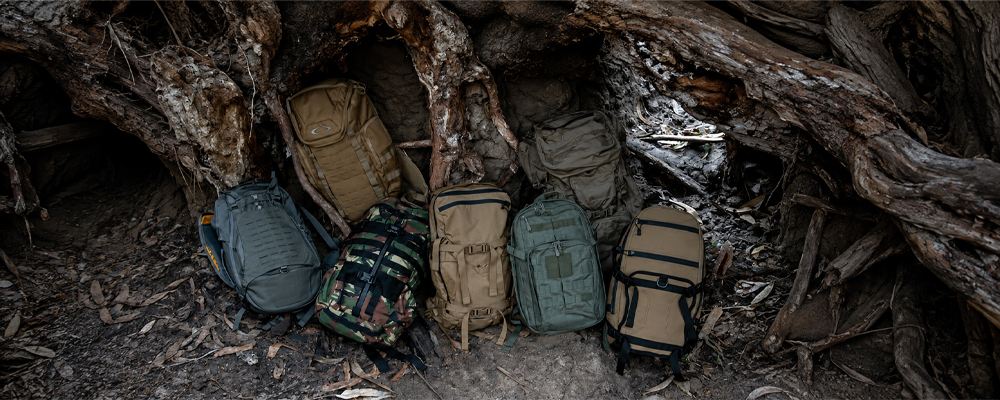
When searching for military backpacks on platforms like Google, Alibaba, or Amazon, you may notice a variety of terms used to describe them, such as rucksack, ruck, assault pack, patrol pack, field pack, MOLLE backpack, ALICE pack, or Bergen.
So, what do these different names actually signify? Nancy, Marketing Manager at Kewei, summarizes them as follows:
- Rucksack – The most common term for a military backpack; it can also be shortened to “ruck.”
- Assault pack / Patrol pack – A smaller backpack designed for short-duration missions.
- Bergen – The term used by the British military for large military backpacks.
- MOLLE rucksack – A term for modern modular backpacks; this is also a style frequently searched for by general consumers.
For outdoor brands, tactical gear companies, distributors, and buyers looking to develop their own military-style backpacks, understanding these names makes it easier to compare different military backpack types and select the right one for specific activities—whether for outdoor travel, shooting range use, law enforcement, or field missions.
Quick answer: What Do Soldiers Call Their Military Backpacks?
In a military context, soldiers often refer to their military backpacks as “rucksacks” or simply “rucks.”
A rucksack is a large, durable load-bearing pack designed to carry clothing, food, water, field tools, and equipment. The term “ruck” is associated with the military practice of “rucking”—marching while carrying a heavy load.
These military packs differ from standard school bags or travel backpacks; they are specifically engineered for heavy loads. They typically utilize tougher, more durable materials and feature complex designs capable of withstanding the harsh conditions of long-distance treks, combat exercises, and field missions.
Why Do Military Backpacks Have So Many Different Names?
Manufacturers design military backpacks based on specific mission requirements. For example:
Soldiers conducting short-duration operations—lasting only a few hours—may need to carry only water, medical supplies, electronic equipment, ammunition, and spare clothing. Consequently, short-range patrol packs are designed to be smaller, simpler in structure, and lighter in weight.
In contrast, soldiers undertaking multi-day missions must carry significantly more gear, including shelter systems, sleeping equipment, food, extra clothing, tools, and other field supplies. For these scenarios, military packs require larger capacities, more complex internal compartments, and greater durability.
Differences in mission nature have given rise to various types of backpacks. Additionally, naming conventions are influenced by the following factors:
- National and military traditions:The U.S. military commonly uses terms like “rucksack,” “field pack,” “ALICE pack,” and “MOLLE rucksack,” whereas the British military refers to large packs as a “bergen” (or “bergan”).
- Size and capacity: Styles range from large, medium, and small packs to mini-packs.
- Mission duration: Packs are selected based on duration—ranging from assault packs and patrol packs to medium-sized packs or Bergens.
- Carry configuration: Options include standard dual-strap backpacks as well as sling packs, chest packs, and waist packs.
- Modular attachment systems: Popular military backpack systems include MOLLE, ALICE, ILBE, and Bergen.
Even if certain military backpacks look very similar at first glance, they may go by a variety of different names.
Common Military Backpack Types
Rucksack / Ruck
“Rucksack” (often shortened to “Ruck”) is the most common name for a large military pack. Designed for carrying heavy loads over long distances, these packs are exceptionally rugged and durable. They offer ample capacity to store multiple sets of clothing, food, a sleeping bag, tool kits, and field gear.
To ensure load-bearing capability, rucksacks utilize heavy-duty fabrics and reinforced stitching at critical points such as handles, the base, and zipper attachments. Features like compression straps, shoulder straps, sternum straps, and internal or external frames help distribute weight evenly, enhancing comfort during long treks.
Assault Pack
Much smaller than a rucksack, the assault pack is designed for short-duration missions. It is primarily used to carry mission-essential gear, such as a hydration bladder, medical supplies, rain gear, gloves, and food.
Compared to standard backpacks, assault packs feature a more compact design, yet they offer impressive storage versatility. In addition to standard compartments, they are equipped with MOLLE/PALS webbing, allowing for the attachment of various accessory pouches.
Patrol Pack
The patrol pack is another relatively compact, military-style pack that prioritizes mobility for short-term use. It is designed to hold essential field gear rather than the full supply load required for extended operations.
Ideal for patrols, short-duration actions, reconnaissance, or single-day missions, the patrol pack is lightweight and durable, significantly enhancing operational agility.
Patrol packs are sometimes referred to as “tactical daypacks” or simply “tactical packs,” depending on the specific military branch or manufacturer.
Field Pack
The term “Field Pack” refers to a pack designed for carrying field equipment. It encompasses a broad range of designs, from older models like the U.S. ALICE pack to modern medium- or large-sized military packs.
Today, consumers searching for a “Field Pack” are generally looking for a rugged, durable military or tactical backpack rather than a specific, singular design.
Bergen
The term “Bergen” is more common in the UK and typically refers to a large, heavy-load military backpack. Its purpose is similar to that of a large rucksack; it is designed to carry a substantial amount of field gear, including tents, clothing, food, tools, and sleeping bags.
For buyers in the UK, terms like “military Bergen” or “Bergen backpack” are likely more widely used—and more readily recognized in military and outdoor circles—than “army ruck.” You can find articles explaining the “Bergen” (and “Bergan”) in *Forces News*.
ALICE Pack
ALICE stands for “All-Purpose Lightweight Individual Carrying Equipment.”
Adopted by the U.S. military in 1973, this early load-bearing system is renowned for its rugged construction and external frame design.
The ALICE pack remains highly popular among military surplus enthusiasts, outdoor adventurers, collectors, and brands developing retro-style tactical gear. Although modern militaries have largely transitioned to the newer MOLLE system, the design philosophy behind ALICE continues to influence the development of civilian backpacks.
MOLLE Backpack
MOLLE stands for “Modular Lightweight Load-Carrying Equipment.”
It generally refers to a modular load-carrying system comprising backpacks, pouches, accessory panels, and other components.
Modern MOLLE backpacks often feature rows of webbing, allowing users to attach items—such as utility pouches, hydration bladders, storage bags, and medical kits—to the exterior. This modular design significantly enhances storage capacity and operational versatility.
The MOLLE system was originally found on large or medium-sized backpacks, serving to expand storage space for logistical supplies. Today, however, many hiking and travel backpacks have adopted the concept of military-style modular attachments as a key selling point.
Haversack & Musette Bag
The haversack is a traditional military bag designed to be carried over the shoulder. The musette bag is another type of vintage, compact military shoulder bag used for carrying a limited amount of personal gear, rations, or lightweight equipment.
While these terms still appear in military historical records and the military surplus market, they are rarely used to describe modern military-style backpacks.
Sea Bag or Military Duffel
A sea bag or military duffel is designed primarily for transporting clothing and equipment.
Although some modern designs include backpack straps, the traditional sea bag is different from a rucksack because it is primarily a transport bag rather than a structured load-carrying backpack.
Military Backpack Names by Use
| Pack Type | Common Use |
| Rucksack / Ruck | Heavy loads and longer-duration missions |
| Assault Pack | Short missions and essential equipment |
| Patrol Pack | Patrol or day operations |
| Field Pack | General field equipment |
| Bergen | Large British-style military load carrier |
| ALICE Pack | Older U.S. military load-carrying system |
| MOLLE Rucksack | Modular military load carriage |
| Haversack | Historical shoulder-carried military bag |
| Sea Bag / Duffel | Clothing and equipment transport |
These names describe the intended role of a pack more accurately than simply calling every product a military backpack.
Comparison of US and UK Military Backpack Terminology
Even for the same type of backpack, names can vary significantly depending on the region. Below are the common terms used in the US and the UK for military backpacks.
In the US, common terms include:
- Rucksack
- Ruck
- Assault pack
- Field pack
- MOLLE rucksack
- ALICE pack
In the UK, “Bergen” is the standard term for large military load-carrying packs. However, in the commercial market, buyers tend to use terms such as:
- Tactical backpack
- MOLLE backpack
- Military backpack
- Assault pack
- Army rucksack
Therefore, if your brand targets the international market, product names for military backpacks should be adjusted based on region, military context, era, and intended use.
Rucksacks vs. Assault Packs: The Difference between Them
The primary differences between a rucksack and an assault pack lie in their capacity and the intended duration of the mission.
| Feature | Rucksack | Assault Pack |
| Capacity | Larger | Smaller |
| Mission Duration | Longer | Shorter |
| Load | Sustainment and field equipment | Mission essentials |
| Carrying Structure | Often more supportive | Usually lighter |
| Hip Belt | Common | Optional |
| Frame | Often included | Less common |
| Typical Commercial Use | Rucking, field use, expedition | Tactical day pack, patrol |
Rucksacks are designed for carrying heavy loads over extended periods; they are primarily used to stow large items such as sleeping bags, multi-day supplies of food and clothing, as well as field tools. In contrast, assault packs prioritize mobility and feature a smaller capacity, designed to hold essentials for short-term missions—such as water, medical supplies, and electronic devices.
Neither design is inherently superior to the other. The choice depends on the items the user needs to carry and the distance or duration of the intended use.
ALICE vs MOLLE vs ILBE vs Bergen Packs
ALICE Pack
Introduced by the US Army in 1973, the ALICE pack features:
- Primarily constructed from 1000D nylon with a polyurethane coating
- Capacity of 65–85L
- External lightweight aluminum alloy frame
- Multiple external pockets
- Quick-release shoulder straps
MOLLE Pack
Gaining popularity in the 1990s, the MOLLE pack features:
- Advanced, water-resistant, and abrasion-resistant materials
- Capacity of 20–70L
- Equipped with PALS webbing
- Configurable based on mission requirements
ILBE Pack
Developed for the US Marine Corps as a high-capacity load-bearing system, the ILBE includes a main pack, an assault pack, and a hydration system. Key features include:
- Primarily constructed from Cordura fabric
- Capacity of 38L–75L
- Internal frame and external MOLLE/PALS webbing
- Quick-adjust waist belt
Bergen Pack
Introduced by the British military during WWII to support mountain troops and commandos carrying heavy loads. Key features include:
- Capacity of 65–85L
- “Can-opener” style lid opening
- Concealed MOLLE/PALS panel on the front
- Support frame
- Padded waist belt
Tactical Backpacks vs. Military Backpacks
Tactical backpacks are used by a wide range of people, including law enforcement officers, outdoor enthusiasts, hunters, and shooting range staff. Military backpacks, however, are typically designed specifically for the armed forces or issued by them.
In terms of design, tactical backpacks often draw inspiration from military models, incorporating features such as MOLLE webbing, compression straps, hydration bladder compatibility, and reinforced carry handles. Military backpacks place greater emphasis on specific materials, camouflage patterns, capacity standards, and load-bearing systems.
Differences Between Military Backpacks and Civilian Backpacks
From a manufacturer’s perspective, the distinction between military and civilian backpacks lies not merely in camouflage patterns or MOLLE webbing, but in structural integrity, durability, and load management.
Fabric Selection
Military backpacks typically utilize rugged fabrics such as 1000D nylon, 600D polyester, Cordura, Oxford cloth, and water-resistant coated materials.
In contrast, civilian backpacks mostly use 600D nylon, polyester, canvas, or blended fabrics. They do not require extreme abrasion resistance or heavy-duty structural integrity; they simply need to withstand daily wear and tear.
When selecting fabrics, the following factors should be considered:
- Target weight
- Load-bearing requirements
- Abrasion resistance needs
- Weather resistance (environmental exposure)
- Price point
- Intended operating environment
Reinforcement of Load-Bearing Areas
Military backpacks must carry personal gear, pouches, food supplies, medical kits, tools, and more. Under heavy loads, robust stress points are crucial to prevent damage during loading or rough handling in the field.
Typical areas requiring reinforcement include:
- Shoulder strap attachment points
- Carry handles
- Waist belt attachment points
- Compression strap anchor points
- Bottom panel
- MOLLE webbing
- Suspension frame attachment points
Depending on load specifications, additional treatments such as bartacking and edge binding may be required.
Suspension System
The suspension system determines how weight is distributed, which directly impacts carrying comfort. Tactical backpacks require more than just soft shoulder straps; they need adjustable sternum straps and waist belts, ventilated back padding, aluminum stays, and sometimes external frames.
These structural designs facilitate even weight distribution and effectively reduce shoulder fatigue.
MOLLE / PALS Webbing
Modular webbing is one of the most distinctive features of tactical and military backpacks, allowing users to attach additional gear.
During development, the layout and spacing of the webbing should be considered at the pattern design stage. Precision and strength in stitching are essential during production; improper spacing or weak stitching can compromise the pack’s utility. Hydration Bladder Compatibility
Many tactical backpacks feature dedicated hydration systems, including a bladder compartment, suspension loops, a hydration tube port, routing channels, and tube attachment points on the shoulder straps.
Hydration systems allow users to drink while on the move—a highly practical feature for those using patrol, hunting, assault, or outdoor tactical packs.
Compression and Attachment Straps
Compression straps are useful whether a tactical pack is fully loaded or only partially filled. For partially filled packs, they minimize the shifting of internal contents during walking or running; when the pack is fully loaded, they help manage its overall volume.
Attachment straps allow users to secure items such as sleeping bags, jackets, helmets, tripods, or other gear. Used together, these straps prevent equipment from shifting during movement and ensure the pack sits close to the body, maintaining a stable center of gravity.
What Should Brands Specify When Developing a Custom Military Backpack?
For brands, distributors, and tactical gear companies, having a clear understanding of the development process for custom military backpacks helps effectively reduce procurement risks and ensures the product’s performance meets expectations.
Intended Use
First, identify the target user group.
For example:
- Military and law enforcement agencies prioritize modularity and expandability, often requiring assault packs, patrol packs, or large rucksacks.
- Outdoor and hunting activities prioritize lightweight comfort; therefore, compact yet high-performance assault packs and patrol packs are preferred.
- For shooting range training, a dedicated range bag is more suitable; these feature numerous specialized pockets to keep gear—such as magazines, hearing protection, and eye protection—
- Tactical-style EDC (Everyday Carry) packs are better suited for daily use, with 20–30L MOLLE-compatible backpacks being an ideal choice.
Materials and Colors
Specify the materials to be used for the main fabric, lining, webbing, mesh, reinforcement materials, and coatings.
Once materials are selected, consider colors and patterns; most military tactical packs utilize black, coyote brown, olive drab, gray, or camouflage patterns.
For brands, matching the color of the main fabric with that of the webbing and zippers significantly enhances the product’s professional look and visual consistency.
Hardware, Zippers, and Webbing
Hardware components influence the backpack’s aesthetic quality, durability, and cost, as well as minimum order quantities (MOQ) and lead times.
Define the performance standards and brand requirements for components such as zippers, buckles, adjusters, hook-and-loop fasteners, and cord locks. Also, specify whether components will be used on load-bearing straps, as strength requirements vary depending on the location.
Modular Systems
If the backpack requires a MOLLE system, specify requirements such as the number, width, and row/column spacing of webbing straps, stitching locations, webbing material, and placement.
For accessory pouches, consider the attachment method to the main pack—options include MOLLE webbing, snap-button straps, hook-and-loop fasteners, or belt loops. Storage Layout
Military tactical packs typically feature multiple pockets, including a main compartment, side pockets, mesh pockets, zippered pockets, tool slots, elastic loops, a hydration bladder sleeve, a helmet compartment, and internal hidden pockets.
When developing custom tactical packs, it is necessary to determine the number, placement, and opening mechanisms of the pockets, as well as lining materials.
Branding Labels
For private and retail brands, the design of branding labels is crucial.
You need to coordinate with the factory regarding label dimensions, placement, thickness, material, manufacturing process, color, and content—including, but not limited to, hangtags, barcodes, and retail cards.
Suspension System
For larger tactical backpacks, a well-designed suspension system ensures even weight distribution, maintains a stable center of gravity, and enhances comfort.
During development and design, the materials and placement of the waist belt, back panel (support sheet), internal support stays, external frame, and breathable back panel must be determined.
Additionally, these areas require extra reinforcement to prevent breakage during training. Reinforcement techniques such as bar-tacking, X-stitching, double stitching, backing fabric, and edge binding should be prioritized.
Performance Testing
To ensure the performance of the tactical packs, random sampling and testing are required during mass production. Test parameters may include:
- Seam strength
- Handle load-bearing capacity
- Shoulder strap load-bearing capacity
- Abrasion resistance
- Zipper durability
- Color fastness
- Buckle functionality
- Tensile strength
- Stitch density
- Logo placement
Kewei employs inspection methods based on the AQL 2.5 standard for final pre-shipment inspections, ensuring our customers receive high-quality custom tactical packs that meet acceptance criteria.
FAQs
What do soldiers call their backpacks?
“Rucksack” or “ruck” are the most common terms. Smaller packs may also be referred to as “assault packs” or “patrol packs.”
What is the difference between the MOLLE and PALS systems on military tactical packs?
MOLLE refers to the overall system concept, whereas PALS refers to the specific grid of webbing used to attach various accessories.
How do I properly adjust a tactical backpack?
When packing, place heavier items at the bottom, close to your back, to ensure a stable center of gravity. Tighten the waist belt to transfer 70–80% of the weight to your hips. Next, adjust the shoulder straps for a proper fit—neither too loose nor too tight. Finally, secure the load lifter straps at a 45-degree angle and adjust the sternum strap to ensure stability.
What is an ALICE pack?
ALICE stands for “All-Purpose Lightweight Individual Carrying Equipment.” It was an early load-bearing system used by the U.S. military and has profoundly influenced the design of many subsequent tactical backpacks.