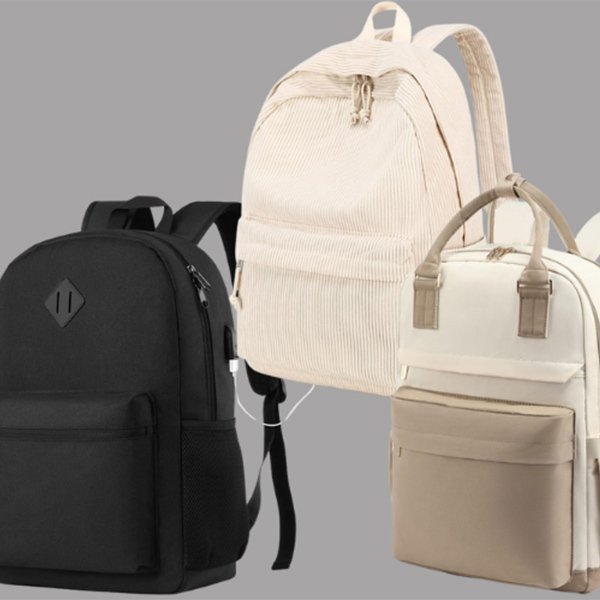
Woven and non-woven fabrics are two important fabric categories used in custom bags. Woven fabrics are suitable for making durable finished bags (such as backpacks, tote bags, crossbody bags, and handbags), while non-woven fabrics are suitable for making lightweight, environmentally friendly shopping bags or as lining materials for bags. Understanding the differences between woven and non-woven fabrics is crucial when choosing fabrics for custom bags.
What are Woven and Non-woven Fabrics?
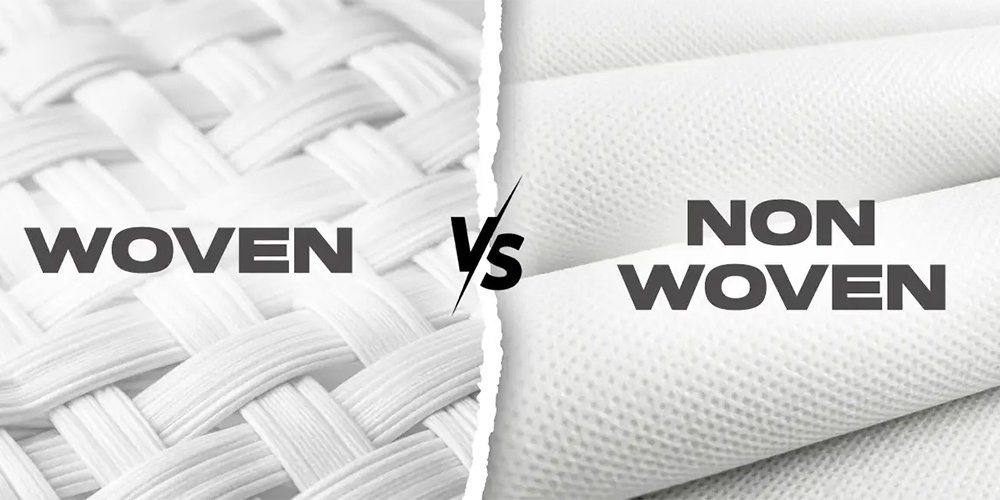
Woven fabrics are made by interlacing two sets of yarns in both warp and weft directions on a loom. This process produces yarns with excellent tensile strength and stability, and a textured feel.
Non-woven fabrics are made by directly bonding fibers together through chemical processes, heat treatment, or mechanical processing. Compared to woven fabrics, non-woven fabrics are easier to manufacture, resulting in faster production speeds. Furthermore, non-woven fabrics are lighter and more flexible, which is why they are a popular choice for environmentally friendly shopping bags and bag linings.
What are the Characteristics of Woven and Non-woven Fabrics?
Woven and nonwoven fabrics have different manufacturing processes, resulting in different characteristics.
Characteristics of Woven Fabrics
- Breathability: The interlacing of warp and weft threads allows air to circulate, making the fabric more breathable and comfortable, reducing odors inside bags—essential for gym bags.
- Durability: Woven fabrics are strong, abrasion-resistant, and have high tensile strength, ensuring the bag effectively resists wear and tear during daily use.
- Preservation of Shape: Compared to nonwoven fabrics, woven fabrics maintain their shape for a longer period and are less prone to sagging, making them ideal for tote bags.
- Environmentally Friendly: The production process of woven fabrics produces and emits less carbon dioxide than nonwoven fabrics, making them more environmentally friendly—a characteristic many consumers value.
Characteristics of Non-woven Fabrics
- Lightweight: Nonwoven fabrics are lighter than woven fabrics.
- Insulation and Antibacterial: The three-dimensional mesh structure of nonwoven fabrics effectively blocks heat conduction and convection. Some nonwoven fabrics also have antibacterial components added during the production process.
- Cost-effective: Compared to woven fabrics, nonwoven fabrics have a simpler production process, resulting in lower costs and suitability for mass production.
Advantages and Disadvantages of Woven and Non-woven Fabrics
Like any fabric, woven and nonwoven fabrics also have their advantages and disadvantages.
Advantages of Woven Fabrics
- Mature Supply Chain: Woven fabric production processes are mature and widely available in the global market.
- Excellent Performance: Woven fabrics are strong and durable, performing excellently in terms of durability, stability, and physical properties, making them a reliable choice for bag materials.
- High Customizability: Woven fabrics can be customized to achieve waterproof and breathable properties through special processes, allowing for customization to meet your needs.
Disadvantages of Woven Fabrics
- Longer Production Process: Compared to nonwoven fabrics, woven fabric production takes longer and is relatively more expensive.
- Edge Finishing: To ensure stability, woven fabrics usually require edge finishing to prevent fraying.
Advantages of Non-woven Fabrics
- Cost-Effective: Nonwoven fabrics can be mass-produced quickly and at low cost.
- Hygiene and Safety: Non-woven fabrics have natural resistance to bacteria, which is why they are used in some gym bags and lunch bags.
- Softness: Non-woven fabrics are soft to the touch and also possess a certain degree of strength and abrasion resistance, making them suitable as lining materials for bags.
Disadvantages of Non-woven Fabrics
- Poor Shape Retention: Due to their softness, non-woven fabrics have relatively low shape retention.
- Low Durability: Most non-woven fabrics are not washable and have relatively poor durability.
What are the Common Types of Woven and Non-woven Fabrics Used in Bags?
Common types of woven fabrics used in bags include:
- Canvas: Canvas is sturdy and abrasion-resistant, making it ideal for tote bags, backpacks, and gym bags.
- Nylon: Nylon is lightweight and possesses a certain degree of strength and abrasion resistance, making it a common material for outdoor backpacks such as hiking bags, mountaineering bags, and adventure bags.
- Polyester: Polyester is inexpensive and highly durable, making it a common material for many commuter bags.
- Oxford Cloth: Oxford cloth has a good texture and a distinct grain, making it a common material for many computer bags and tool bags.
Non-woven fabrics are mainly used for the lining of bags and include the following different types:
- SS non-woven fabric: SS non-woven fabric is soft and smooth, and is often used for the inner lining of wallets;
- SMS non-woven fabric: SMS non-woven fabric is waterproof and relatively stiff, mainly used for the lining of outdoor bags, baby bags, and cosmetic bags;
- PP non-woven fabric: PP non-woven fabric is stiff, thick, and inexpensive, and can be used to make bag padding;
- Spunlace non-woven fabric: Spunlace non-woven fabric is a higher-end material and is generally used as the lining material for luxury bags.
How to Distinguish Between Woven and Non-woven Fabrics?
To determine whether a bag is made of woven or non-woven fabric, you can follow these steps:
Identifying Woven Fabric
- Observe the fabric for a clear warp and weft weave pattern. If present, it’s woven.
- Woven fabric is relatively stiff and not easily stretched.
- Cut the fabric open; if the threads unravel along the edges, it’s woven.
Identifying Non-woven Fabric
- Non-woven fabric lacks a specific weave direction and doesn’t have a distinct front or back.
- Pull the fabric; if it tears easily, it’s non-woven.
Most bag manufacturers, including Kewei, don’t use a single fabric in their production. Instead, we selectively combine different fabrics based on performance characteristics. This allows them to offer competitive pricing while maintaining the bag’s aesthetics, performance, and functionality, thus meeting customers’ customization needs.
FAQ
F: Which bags use woven fabrics?
A: Woven fabrics are the mainstream material for bag manufacturing; almost all types of bags use woven fabrics. For example, commuter bags and laptop bags use woven fabrics such as nylon, polyester, and canvas; hiking bags and trekking bags use woven fabrics such as Cordura, Oxford cloth, and ballistic nylon; tactical bags use woven fabrics such as 1000D nylon, Cordura, and Oxford cloth.
F: Which bag styles use non-woven fabrics?
A: Compared to woven fabrics, bags using non-woven fabrics are relatively less common. Some business bags use non-woven fabrics such as genuine leather or synthetic leather; waterproof bags and diving bags use non-woven fabrics such as TPU and PVC; some children’s cartoon bags use non-woven fabrics such as PU, plastic, and PVC, which are easier to clean.
F: How to care for woven and non-woven fabric bags?
A: Proper care can effectively extend the lifespan of a bag. Woven and non-woven bags require different care methods.
Detailed Care Guide for Knitted bags:
- Empty the bag of any items and shake it upside down to remove any dust.
- For small stains during daily use, gently wipe with a damp cloth and a small amount of detergent, then wipe away the detergent with a clean, damp cloth. It’s best to use a neutral, non-irritating detergent.
- For regular deep cleaning, remove all detachable accessories, empty the bag, shake off any dust, and soak it in cold or warm water with a neutral detergent for half an hour. Then, gently brush the shoulder straps and bottom area with a soft brush, and rinse thoroughly with clean water to remove any remaining detergent.
- Hang the bag in a cool, well-ventilated place to air dry, avoiding direct sunlight and using a dryer to prevent fading and deformation.
Detailed Care Guide for Non-woven bags:
- Keep non-woven bags away from sharp objects to prevent scratches;
- For daily cleaning, simply wipe with a slightly damp, soft cloth;
- For stubborn stains, use a professional cleaning agent to avoid damaging the surface structure; Regularly check the seam sealing of the bag for damage.
- If there is wear or separation, repair or replace the bag promptly;
- Non-woven bags should be stored in a cool, dark place and should not be folded to prevent aging and irreversible creases.
Whether caring for a woven or non-woven bag, always read the care label before proceeding.
F: Are all woven fabric bags waterproof?
A: In fact, most woven fabric bags have a water-repellent function, but they are not completely waterproof. To enhance the waterproof performance of woven fabric bags, special processes or additional accessories are typically used, such as: using waterproof-sealed woven fabrics with a TPU waterproof membrane on the inside and heat-sealed seams; adding a waterproof coating to the surface of the woven fabric to improve its waterproof performance; and using a separate rain cover to provide comprehensive protection for the bag.