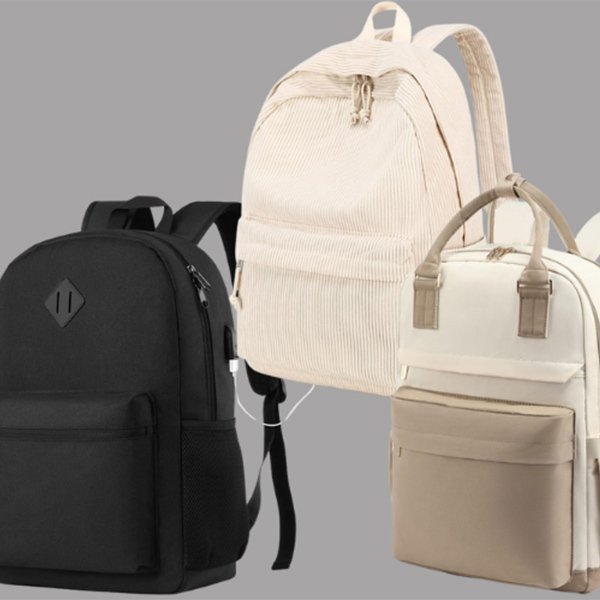
Many customers consider numerous factors when choosing a backpack manufacturer, such as backpack style, target customers, customization services, cost, factory size, and production process. You may also face a choice, such as whether to choose a Chinese manufacturer or an American manufacturer. To help you understand these factors in detail, Kewei has written this blog post, hoping it will be helpful.

Common Backpack Styles Produced by Backpack Manufacturers
Backpack manufacturers can produce different styles of backpacks on demand. Some common styles include the following 20 types:
- Laptop Backpacks
- Hiking Backpacks
- Drawstring Backpacks
- Camera Backpacks
- Hydration Backpacks
- Business Backpacks
- Tactical Backpacks
- Travel Backpacks
- Student Backpacks
- Medical Backpacks
- Adventure Backpacks
- Foldable Backpacks
- Lightweight Backpacks
- Roll-up Backpacks
- Lunch Backpacks
- Sports Backpacks
- Cycling Backpacks
- Running Vests
- Hunting Backpacks
- Hiking Backpacks
These different backpack styles have different characteristics, advantages, and disadvantages. If you want to learn more, you can click to read our article “50 Types of Bag That will Rocket Your Business“.
Who are the Target Customer Groups of Backpack Manufacturers?
Backpack manufacturers offer customization services and production and cost advantages, thus targeting primarily B2B clients such as retailers, sports brands, schools, and backpack distributors.
They have varying needs regarding backpack types and designs. Retailers often purchase or customize lightweight everyday backpacks, commuter backpacks, and laptop backpacks. Sports brands typically purchase running vests, hiking backpacks, trekking bags, gym bags, and yoga bags. Schools customize children’s backpacks, student shoulder bags, and student backpacks. Backpack distributors purchase a wide variety of backpack styles, such as casual backpacks, outdoor backpacks, sports backpacks, and travel backpacks.
In short, backpack manufacturers leverage their advantages to provide clients with diverse customized backpack solutions.

What Customization Services Do Backpack Manufacturers Offer?
Backpack manufacturers typically create backpack samples based on the client’s design and requirements before mass production begins. In this process, clients will first inquire with backpack manufacturers about available customization options. Most backpack manufacturers, including Kewei, offer the following customization services:
- Backpack size
- Backpack structure
- Backpack fabric
- Backpack color
- Backpack zippers
- Backpack accessories
- Backpack logo
- Backpack packaging
Among these customization options, backpack structure and fabric are two particularly important factors as they affect performance. Different backpacks have different structures. For example, casual bags and children’s bags have simple structures and small sizes, with less emphasis on load-bearing capacity. However, hiking and mountaineering backpacks require specialized structural systems, such as ergonomic design, back ventilation systems, and water and moisture protection systems. High-quality, tear-resistant fabrics allow the backpack to withstand daily wear and tear, extending its lifespan.
During the backpack customization process, the manufacturer will leverage their extensive experience to provide clients with a professional customized backpack solution or offer reasonable product design suggestions. This helps clients create better products and save costs.
Backpack Manufacturer’s Factory Size
Understanding the backpack manufacturer’s factory size before cooperation is essential, as it may affect product quality consistency and production efficiency. In measuring the scale of a backpack manufacturer’s factory, the number of employees is a core element. A larger workforce indirectly reflects a greater number of production lines and higher production efficiency. The employee positions in a backpack manufacturer’s factory generally include:
- Designers
- Punch Press Operators
- Sewing Workers
- Quality Inspectors
- Packaging Workers
- Shipping Personnel
Among these positions, sewing workers are the most numerous. Currently, a backpack factory with over 100 sewing workers can be considered a large-scale backpack manufacturer. Only when each position performs its duties effectively and the entire team works together can high-quality backpack products be efficiently delivered to customers.
What are the Production Processes of a Backpack Manufacturer?
While the details and procedures of different backpack manufacturers’ production processes may vary, the general steps are the same, mainly including:
- Making samples based on customer needs
- Sample confirmation
- Purchasing raw materials
- Cutting fabric
- Customizing patterns or logos
- Assembly line sewing
- Quality inspection of finished backpacks
- Packaging
Only after completing all these processes can a finished backpack that meets specifications be produced.

China vs. US Backpack Manufacturers: A Comparison
Both China and the US host numerous backpack manufacturers, but they serve different market segments. China leads in global production volume, while the US is renowned for premium brands and innovative designs. How do they compare, and which is right for you?
Styles & Complexity
China: Experts in producing a wide array of styles like student, laptop, commuter, kids’, running vests, trekking, and gym/yoga bags. These often feature straightforward structures and controllable costs.
US: Specializes in technically complex packs like mountaineering backpacks and leather backpacks, typically having higher value.
Quality
China: Many manufacturers boast robust supply chains, extensive experience, and strict quality control systems, often accepting third-party inspections. However, due diligence is needed to identify lower-tier suppliers.
US: Known for excellent craftsmanship and high-quality finished products, particularly in complex designs. However, production can be less efficient, potentially affecting project timelines.
Cost
China: Benefits from competitive labor costs, making it a primary source for high-value, cost-effective production.
US: Higher labor expenses often result in significantly higher price points for similar styles.
Production Efficiency
China: Large manufacturers with hundreds of workers and multiple production lines can handle high-volume orders efficiently, ensuring shorter lead times.
US: Smaller factories are ideal for low-volume orders but may struggle with large, time-sensitive requests.
Making the Choice
Choose a US manufacturer for low-volume, complex, high-value products like technical mountaineering or leather packs, where lead times are flexible.
Choose a Chinese manufacturer for high-volume, cost-sensitive orders with tight deadlines. Based on Kewei’s experience, most clients prioritizing cost control and speed choose to source from China.
Why Choose Kewei?
As a specialist Chinese backpack manufacturer with over 15 years of experience, Kewei operates a 70,000 sqm factory with 300+ dedicated professionals. Our products are certified under BSCI and ISO9001 management systems. Partner with Kewei for reliable, professional service and support.
FAQ
F: What logo customization options do backpack manufacturers offer?
A: backpack manufacturers, including Kewei, offer logo customization options including inner labels, zipper pull logos, heat transfer logos, embroidered logos, metal logos, embossed logos, care label logos, Velcro patch logos, screen printing, and rubber logos.
F: What tests do backpacks typically undergo?
A: After designing and building a comfortable and durable backpack, manufacturers conduct various tests, including weight testing, abrasion resistance testing, waterproof testing, colorfastness testing, zipper fatigue testing, and impact testing, to ensure the backpack can be used normally in daily life and even in complex environments.
F: What factors should be considered when choosing a backpack manufacturer?
A: Choosing a backpack manufacturer requires considering multiple factors to ensure product quality and establish a long-term partnership. Key factors include: the backpack styles, customization capabilities, certifications, factory size, production experience, materials, production capacity, manufacturing processes, cost, product development capabilities, quality control system, after-sales service, and reputation.
F: What are some common certifications in the backpack industry?
A: Backpack manufacturers typically need several certifications to meet the requirements of different countries, brands, and sales channels. Below is a list of some commonly recognized international certifications:
- BSCI: Ensures that backpack manufacturers meet requirements regarding employee welfare, safe production, and working hours;
- Sedex: A crucial entry point into the European and American markets, enhancing factory reputation, supply chain transparency, strengthening trust in partnerships, and reducing risks;
- ISO 9001: A globally recognized factory quality management standard that verifies whether a manufacturer has a systematic quality control process;
- SGS: One of the world’s largest testing, certification, and verification organizations. Backpack manufacturers certified by SGS are widely recognized by international brands and various importers;
- Disney Certification: Grants the legal right to produce products featuring Disney characters, which is crucial for children’s backpacks.