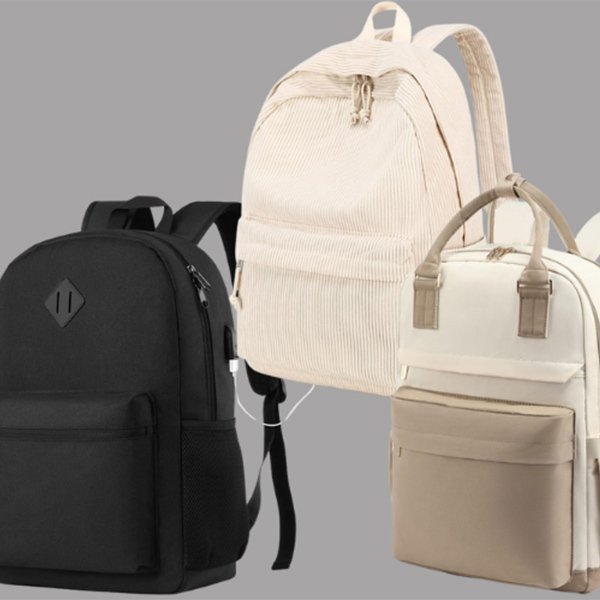
When sourcing backpacks for your brand or business, you may notice that two backpacks that look nearly identical can differ significantly in price — sometimes by $15, sometimes by as much as $150. That’s because price is shaped by materials, design, construction quality, and brand positioning. There’s a backpack for every budget, from affordable everyday options to high-end luxury pieces on the market.
This “backpack price guide” detailed the real price ranges by backpack type and explains what actually drives the cost difference — whether you’re a consumer buying one bag or a brand sourcing thousands.
Key Takeaways
- Backpack prices on the market range from low to high, generally from under $10 to over $1000.
- Material quality is a major factor affecting price and backpack durability; mid- to high-end backpacks use better materials and are therefore more durable.
- For brands and buyers sourcing in bulk, style, MOQ, factory certifications, and customization method all affect the final unit price.
- Certifications such as BSCI, ISO 9001, SGS, and Sedex are also important. They relate to product compliance and quality.
Average Backpack Price by Segment
The backpack market divides naturally into three price segments: economy, mid-range, and high-end. Here’s what you get at each level.
Economy Backpacks ($10-20 USD)
Economy backpacks are designed for buyers with limited budgets, such as students, recent graduates, or as promotional gifts. These backpacks typically use 210D or 420D polyester fabric, simple plastic zippers or drawstrings. The design is relatively simple, often with only one large pocket and one or two compartments. They have limited load-bearing capacity, are not suitable for carrying heavy items, and may only last 6 to 12 months, generally used as everyday backpacks.
| Feature | Budget Backpack |
| Typical material | 210D – 420D polyester |
| Zipper quality | Generic (no brand) |
| Padding | Minimal or none |
| Lifespan (daily use) | 6–12 months |
| Retail price range | $10 – $20 |
| Wholesale FOB price | $4.5 – $5.5 per unit |
It’s worth noting that rising production costs — up 24% between 2022 and 2026 — have pushed prices upward across all segments, including budget bags.
Mid-Range Backpacks ($50–$200)
Most buyers who aren’t looking for promotional products land in the mid-range — and for good reason. These backpacks use 600D–900D polyester or nylon, branded zippers (usually YKK), padded back panels, and multiple organized compartments. They hold up well for commuting, travel, and outdoor activities, with a typical lifespan of 2 to 3 years. For most consumers, mid-range represents the best balance of quality and value.
| Feature | Mid-Range Backpack |
| Typical material | 600D – 900D polyester / nylon |
| Zipper quality | YKK or equivalent branded |
| Padding | EVA / EPE / PU |
| Lifespan (daily use) | 2–3 years |
| Retail price range | $50 – $200 |
| Wholesale FOB price | $8 – $60 per unit |
Many well-known brands offer mid-range lines, including the Osprey Exos 58 and the Deuter Aircontact Ultra series. When brands source custom backpacks at mid-range specs, it’s typically to maintain product quality that protects their reputation.
High-End and Luxury Backpacks ($200+)
To guarantee a premium feel, high-end luxury backpacks typically use premium materials such as Cordura nylon, full-grain leather, and Dyneema, combined with exquisite hardware, meticulous craftsmanship, and advanced ergonomic design, making them ideal for consumers seeking high quality and style.
In the high-end backpack market (above $500), consumers primarily pay for brand value. A $1500 Louis Vuitton backpack and a $200 premium leather bag offer virtually identical functionality, and neither requires as much maintenance.
| Brand | Segment | Approx. Price Range |
| JanSport | Budget / Mid | $25 – $60 |
| Herschel | Mid | $60 – $130 |
| The North Face | Mid | $80 – $180 |
| Osprey | Mid / High | $100 – $400 |
| Arc’teryx | High | $250 – $600 |
| Gucci | Luxury | $800 – $2,000+ |
| Louis Vuitton | Luxury | $1,500 – $4,000+ |
Keep in mind that even within the same price segment, specialized backapcks — like technical hiking packs or mountaineering packs — typically cost more than totes or casual daypacks due to their material requirements and structural complexity.
Types of Backpacks and Their Typical Prices
Backpacks vary in style, structure, fabric type, and size. Below are common backpack types and their prices on the market.
Everyday and School Backpacks
This is the most common category on the market, ranging from $15 drawstring bags to $80 structured school backpacks. They are mostly minimalist designs, typically with one or two large pockets and several small compartments. For added comfort, their shoulder straps and top handles are usually padded for easy carrying. Most consumer purchases fall into this category.
Laptop Backpacks
Beyond the padded laptop sleeve, laptop backpacks include a range of small pockets for chargers, tablets, and accessories — all of which add to production cost. Retail prices typically fall between $25 and $100 for a solid laptop backapck. Features that push the price higher include thick shoulder padding, anti-theft pockets, USB charging port pass-throughs, and trolley sleeves for luggage compatibility.
Outdoor and Hiking Backpacks
Hiking backpacks require more abrasion-resistant fabrics and significantly more complex construction — internal frames, suspension systems, hip belts, sternum straps, and hydration reservoir compatibility all add cost. Entry-level hiking packs start at around $60, while multi-day expedition backapcks typically run $150 to $400.
Gym Sport Bags
Gym sport bags need to handle clothing, shoes, and equipment. Quality gym sport bags use reinforced materials, durable base panels, and strengthened seams at high-stress points. Wet/dry separation compartments and ventilated shoe pockets are important features that reduce bacteria buildup and odor. Premium gym sport bags typically start above $100 — the Aer Duffel Pack 3 retails at $179, while the Aer Gym Tote is $110.
Tactical Backpacks
Built for heavy-duty use, tactical backpacks use 1000D nylon or Cordura, MOLLE webbing systems, and reinforced stitching throughout. These backpacks are expensive to manufacture and retail from $60 to $250 and above.
Designer Fashion Backpacks
Designer fashion backpacks prioritize luxury aesthetics over function. Brands like Gucci, Louis Vuitton, Prada, and Chanel use materials such as leather, suede, and premium canvas, paired with metal hardware, brand monograms, and soft adjustable leather straps. Beyond functionality, these fashion backpacks carry significant brand value and collectible appeal. Prices start around $200 and can exceed $2,000.
Drawstring and Promotional Bags
hese are the simplest and most affordable category of backpacks. They are often used as promotional gifts for various events, such as brand promotions and large trade shows, effectively attracting consumer attention. The production cost of a 210D polyester drawstring bag can be less than $5 (FOB), while promotional backpacks are slightly more expensive, but still under $10. They are excellent marketing tools for businesses, and you can choose to print your brand logo on them.
Key Factors That Determine Backpack Price
Fabric
Fabric is the largest component of a backpack, making it the biggest cost driver — typically accounting for 30% to 45% of total manufacturing cost. Furthermore, the higher the denier (D) number of the fabric, the heavier and more expensive it is, potentially increasing costs by 10% to 50%. Eco-friendly fabrics are also more expensive than regular fabrics, with a premium ranging from 10% to 25%.
| Fabric | Denier Range | Cost Level | Common Use |
| Polyester | 210D – 600D | Low – Medium | School bags, promo bags |
| Polyester | 900D – 1200D | Medium | Laptop bags, commuter bags |
| Nylon | 420D – 1000D | Medium – High | Outdoor backpacks, premium bags |
| Cordura Nylon | 500D – 1000D | High | Tactical backpacks, heavy-duty bags |
| Ripstop Nylon | 70D – 210D | Medium | Ultralight hiking backpacks |
| Canvas | 10oz – 16oz | Medium | Fashion bags, casual bags |
| PU / Faux Leather | — | Medium – High | Fashion bags, laptop sleeves |
Note: If on a budget, polyester or cotton are good choices, but durability is limited.
Zipper and Hardware Quality
Zipers and other hardware affect the backpack’s feel and user experience. YKK zippers are more expensive than regular zippers, and metal magnetic buckles are more expensive than plastic buckles, both of which increase the manufacturing cost of backpacks. If you prioritize quality when customizing a backpack, YKK zippers and metal hardware are more suitable. If your budget is limited, you can choose regular zippers or plastic buckles. At Kewei, you can customize both high-quality backpacks with YKK zippers and cost-effective backpacks with regular zippers.
Construction and Feature Complexity
The more complex the backpack’s structure, the more pockets and compartments it has, and the higher the cost will be. Adding special features to the compartments and pockets, such as cushioning padding, anti-theft pockets, and USB charging ports, will further increase the cost.
For laptop backpacks and hiking backpacks, padded pockets, shoulder straps, and waist belts are indispensable components, greatly improving protection and comfort. Furthermore, adding advanced features can effectively attract specific consumers. For example, Kewei’s hiking backpacks with rain covers further enhance waterproofing and are loved by many customers.
Branding and Customization
Most brands customize their backpacks with colors, logos, labels, and packaging — all of which affect cost. Using stock colors, a simple logo, and standard poly bags keeps costs down. Custom fabric colors, woven labels, hang tags, and logo patches add to unit cost, but remain within a reasonable range for most budgets.
| Method | Cost Level | Best For |
| Screen printing | Low | Simple logos, flat panels |
| Heat transfer | Low | Full-color, detailed artwork |
| Embroidery | Medium | Premium, textured look |
| Rubber / PVC patch | Higher | Tactical, outdoor brands |
| Woven label | Low | Interior branding, hang tags |
| Custom zipper pulls | Higher | Premium unboxing experience |
Certifications and Quality Standards
Manufacturing standards and compliance also affect cost. Manufacturers with rigorous quality control assign dedicated QC inspectors to each production line to catch defects at every stage — and that labor cost is built into the product price. At Kewei, we assign one QC inspector per two production lines, and every finished product goes through 11 inspection checkpoints. Obtaining and maintaining certifications like ISO9001, BSCI, and Sedex also requires time and investment, which is reflected in pricing.
It might be tempting to source from the lowest-priced factory, but the risks are real. Manufacturers competing on rock-bottom pricing often cut corners on materials, which reduces durability. High return rates can damage your brand reputation quickly. A factory without proper compliance credentials may also face product recalls or shipping delays — setbacks that cost far more than any savings on unit price.
How Brands, Retailers, and Distributors Can Save Costs When Customizing Backpacks
Whether you’re a brand, retailer, or distributor, keeping saving costs in line with your budget — while protecting your margins — is always a priority. As a manufacturer, Kewei understands every step of the production process, from design and material sourcing to final production. Here are some practical ways to manage costs without compromising quality.
- Keep the simple Prioritize core features and reduce unnecessary pockets or compartments. Simpler construction meaningfully lowers unit cost.
- Work with a low-MOQ manufacturer. Some manufacturers, like Kewei, offer flexible minimums starting from 300 pieces — making it easier to test new designs withlow risks.
- Bulk ordering. Most manufacturers offer tiered pricing. The more you order, the lower your per-unit cost.
- Use standard materials. Stock fabrics, plastic buckles, and off-the-shelf hardware cost less than custom or specialty alternatives.
- Choose simpler branding methods. Single-color screen printing costs less than complex embroidery or custom patch work. Printing is generally more affordable than embroidery or rubber logos.
How OEM/ ODM Manufacturers Support B2B Buyers
Most brands start with ODM to test the market, then move to OEM as volume and design requirements grow. Here’s why that progression makes sense:
ODM manufacturers offer existing designs that you can customize with colors, minor adjustments, and your brand logo. This reduces upfront costs and speeds up time to market for new products.
OEM manufacturers produce backpacks based on your own designs, giving you greater market differentiation and a more competitive product.
Beyond production, experienced manufacturers can provide additional support, including:
- Recommending the suitable solution A knowledgeable manufacturer can advise on materials, zippers, structure, and logo methods based on your budget — helping you strike the right balance between cost, quality, and functionality.
- Shortening lead times. Manufacturers with in-house sampling teams, purchasing departments, and production lines can accelerate development — which matters for brands managing seasonal launches, back-to-school timelines, or outdoor peak seasons.
- Ensuring consistent quality. Established production processes and strict QC systems — including fabric inspection, stitching quality checks, finished product appearance review, dimensional checks, and performance testing — help reduce after-sales costs and protect your brand’s reputation.
Backpack prices span a wide range, and the right choice depends on your needs, budget, and quality expectations. Beyond price, it’s worth considering durability and long-term value. Working with an experienced manufacturer like Kewei means access to cost-effective custom backpack solutions — backed by transparent processes, flexible MOQs, and consistent quality control.